
As I stirred the vibrant red gochujang sauce into a sizzling pan, a wave of warmth and spice filled my kitchen, instantly transporting me to the bustling streets of Seoul. These Korean Spicy Chicken Noodles combine chewy noodles and succulent chicken, enveloped in a glossy sauce that dances between heat and sweetness. Not only is this dish quick to prepare—perfect for those weeknight dinners—but it also allows for countless variations to suit any palate, whether you’re opting for pork belly or firm tofu. I’ve been known to sneak in some crunchy veggies or kimchi for an extra punch of flavor! Are you ready to discover the delightful balance of Korean flavors in your own kitchen?
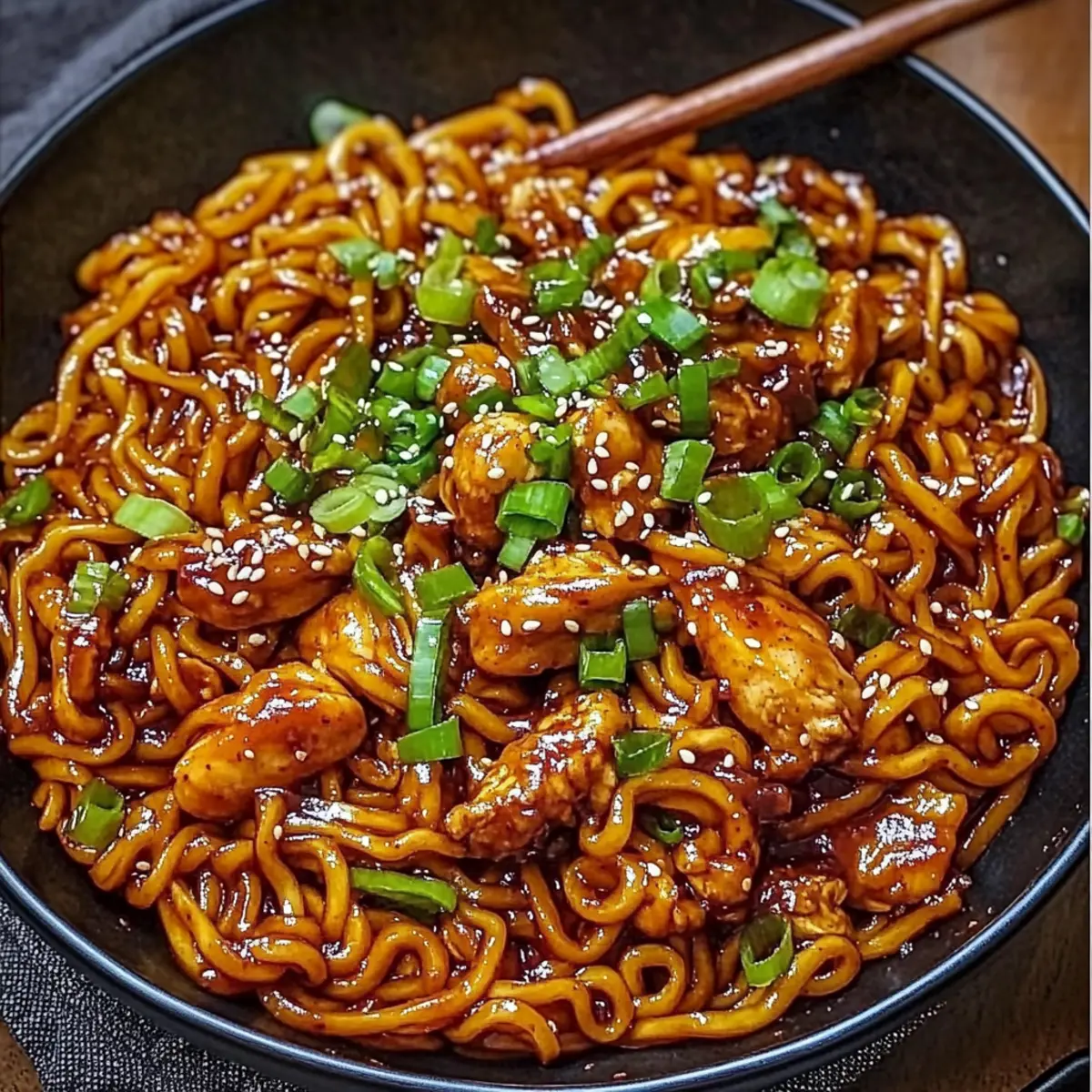
Why are Korean Spicy Chicken Noodles a must-try?
Quick to Prepare: With just 30 minutes needed, you’ll serve up a delicious dinner without stress.
Flavor Explosion: The gochujang sauce delivers a perfectly balanced blend of heat and sweetness that’s simply irresistible.
Versatile Ingredients: Enjoy the freedom to customize with proteins like pork belly or firm tofu and seasonal veggies—no two dishes need to be the same!
Crowd-Pleaser: Whether it’s a family gathering or a simple weeknight dinner, these noodles can satisfy everyone’s cravings.
Comfort Food: Thick, chewy noodles enveloped in a rich sauce make this dish your go-to for cozy evenings, akin to a hearty bowl of ramen.
Dive into this recipe today, and for another quick meal option, check out Garlic Chicken Noodles or the delectable Dragon Chicken Spicy!
Korean Spicy Chicken Noodles Ingredients
For the Noodles
• Fresh Ramen or Udon Noodles – Essential for that delicious chewiness; if unavailable, thick spaghetti works too.
For the Chicken
• Boneless Chicken Thighs – Tender and flavorful, perfect for soaking up the gochujang sauce; substitute with firm tofu for a vegetarian option.
For the Sauce
• Gochujang (Korean chili paste) – The star of the dish, providing the right amount of heat and umami; adjust based on your spice tolerance (2-4 tablespoons).
• Soy Sauce – Adds a rich umami depth to the sauce blend.
• Brown Sugar – Balances the heat with a touch of sweetness, creating a harmonious flavor.
• Sesame Oil – Infuses nuttiness into the sauce, enhancing overall flavors.
• Garlic – Provides an aromatic boost that elevates the sauce profile.
For the Garnish
• Sesame Seeds – Sprinkle for a delightful nutty crunch on top.
• Scallions – Freshly chopped for a pop of color and a crunchy freshness.
Step‑by‑Step Instructions for Korean Spicy Chicken Noodles
Step 1: Prepare Noodles
Begin by bringing a large pot of water to a rolling boil. Cook fresh ramen or udon noodles according to package instructions, usually around 3-5 minutes, until they’re just tender but still chewy. Once done, drain the noodles and rinse them under cold water to stop the cooking process and prevent sticking.
Step 2: Make Sauce
In a small bowl, whisk together 2-4 tablespoons of gochujang, soy sauce, brown sugar, sesame oil, and minced garlic. Stir until you achieve a smooth, cohesive mixture. If the sauce is too thick, add a splash of water to reach the desired consistency. This savory-sweet gochujang sauce will coat your chicken and noodles perfectly.
Step 3: Cook Chicken
Heat a tablespoon of oil in a large skillet over medium-high heat. Once the oil is shimmering, add in your boneless chicken thighs, cooking for 6-8 minutes. Sauté the chicken until it turns golden brown and is cooked through, reaching an internal temperature of 165°F. Flip occasionally for even browning.
Step 4: Combine Sauce and Chicken
Once the chicken is thoroughly cooked and absorbing those beautiful flavors, pour the prepared gochujang sauce over the chicken in the skillet. Stir well to coat the chicken evenly and let it simmer for 2-3 minutes. The sauce should become glossy as it warms with the chicken, creating a tantalizing aroma.
Step 5: Mix Noodles and Sauce
With the chicken now coated in sauce, add the cooked noodles directly to the skillet. Toss everything together for about 1-2 minutes, ensuring the noodles are well coated with the glossy sauce and heated through. The vibrant colors of the Korean Spicy Chicken Noodles will fill your kitchen with irresistible warmth.
Step 6: Serve
Transfer the steaming Korean Spicy Chicken Noodles into bowls, adding a sprinkle of freshly chopped scallions and toasted sesame seeds on top for garnish. Enjoy this delightful meal while it’s hot, savoring every bite filled with layers of flavor and comforting chewiness.
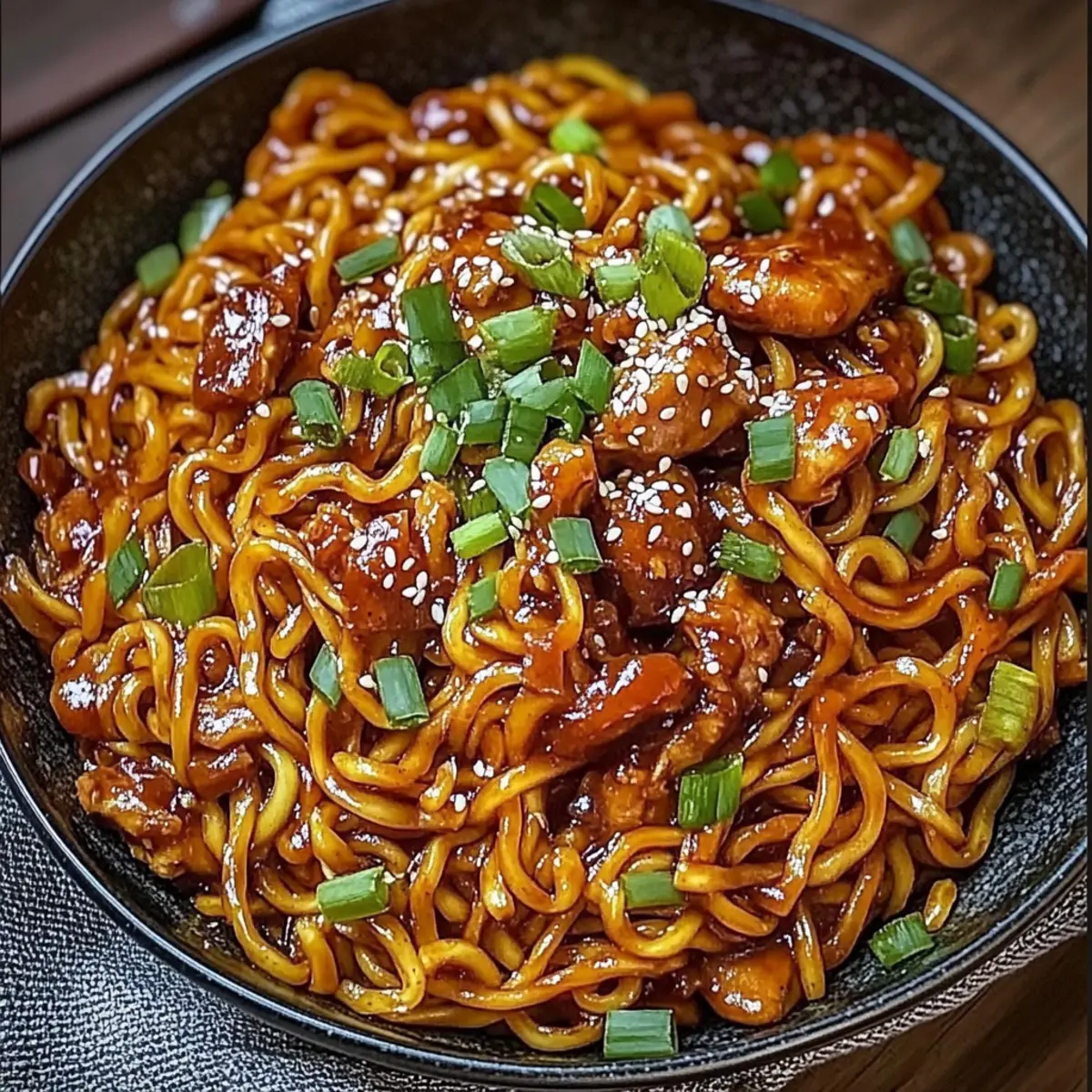
How to Store and Freeze Korean Spicy Chicken Noodles
Fridge: Store any leftover Korean Spicy Chicken Noodles in an airtight container in the fridge for up to 3 days. This keeps the noodles from drying out and maintains their flavor.
Freezer: For longer storage, freeze the noodles and sauce separately. Pack them in airtight freezer bags or containers for up to 2 months. Thaw in the fridge overnight before reheating.
Reheating: Reheat the chicken and sauce in a skillet over medium heat until warmed through. Add a splash of water if the sauce seems too thick. Serve with freshly cooked noodles for the best texture.
Make-Ahead Tips: You can prepare the chicken and sauce a day in advance. Store them separately and mix with freshly cooked noodles when ready to serve for a quick meal.
Expert Tips for Korean Spicy Chicken Noodles
• Choose the Right Noodles: Use fresh ramen or udon for the best texture. If unavailable, thick spaghetti can work, but cooking times may vary.
• Adjust the Spice: If you’re unsure about heat intensity, start with a lower amount of gochujang, then taste and add more. You can always increase the spice!
• Prepping Made Easy: Prepare the chicken and sauce in advance to streamline cooking during busy weeknights. This ensures a quick dinner with minimal stress.
• Don’t Overcook: Keep an eye on your chicken while cooking; overcooking can lead to dryness. Cook until it’s golden brown and reaches an internal temperature of 165°F.
• Mix-in Ideas: Add vibrant veggies like bell peppers or snap peas to elevate the dish and make it more nutritious. Don’t hesitate to include leftover kimchi for extra flavor!
• Serving Suggestions: For a complete experience, enjoy your Korean Spicy Chicken Noodles with a side of pickled radishes or a refreshing cucumber salad.
Korean Spicy Chicken Noodles Variations
Feel free to make this dish truly your own with these delightful twists and substitutions!
- Protein Swap: Replace chicken with pork belly or firm tofu for a different texture and flavor experience. Each option brings its own unique flair to the dish!
- Veggie Boost: Add colorful bell peppers, snap peas, or even shredded carrots to amp up the nutrition and crunch. This addition will make every bite a delightful surprise.
- Kimchi Kick: Toss in some kimchi for added depth and probiotic goodness. The tanginess of kimchi enhances the overall flavor profile, making it even more satisfying.
- Heat Level: Adjust the amount of gochujang based on your heat preference. Start with 2 tablespoons for milder heat, and add more if you dare! This allows everyone to enjoy their perfect level of spiciness.
- Noodle Variations: Swap fresh ramen for flat rice noodles or even zoodles (zucchini noodles) for a gluten-free or lower-carb option. These swaps can cater to various dietary needs without sacrificing flavor.
- Creamy Twist: Stir in a splash of coconut milk for a creamy sauce that tones down the spice while adding richness. This makes for a much softer texture, making it appealing to those who are spice-sensitive!
- Herb Infusion: Fresh herbs like cilantro or Thai basil can be sprinkled on top right before serving for an aromatic lift. Their fragrant qualities will elevate your dish, creating an enticing aroma!
Try mixing and matching these variations to discover your perfect bowl of bliss, and don’t forget to check out Dollys Chicken and Stuffing for more comforting flavors!
Make Ahead Options
These Korean Spicy Chicken Noodles are perfect for meal prep, allowing you to enjoy a home-cooked meal even on the busiest evenings! You can prepare the chicken and sauce up to 24 hours in advance. Cook the chicken and toss it in the gochujang sauce, then refrigerate in an airtight container. For optimal quality, reheat the chicken and sauce separately in a skillet before adding fresh, cooked noodles. These steps ensure the noodles don’t become mushy and maintain that delightful chewiness when serving. With just a quick finish of reheating, you’ll savor just as delicious flavors without a fuss!
What to Serve with Korean Spicy Chicken Noodles
These savory noodles perfectly balance spice and sweetness, inviting you to create a delightful meal around them.
-
Kimchi: This traditional Korean side adds a crunchy, spicy kick, enhancing the overall flavor profile of your dish.
-
Cucumber Salad: A refreshing cucumber salad with a tangy vinaigrette offers a crisp contrast to the rich, spicy noodles. Its coolness is a perfect palate cleanser.
-
Pickled Radishes: The sharp, tartness of pickled radishes complements the heat of the noodles, adding a burst of flavor and crunch.
-
Steamed Broccoli: This light and healthy side provides a tender texture and bright color that balances the hearty noodles beautifully.
-
Cold Korean Beer: Pair your spicy meal with a refreshing cold beer, which helps to mellow the flavors and refresh your palate with each sip.
-
Sesame Green Beans: Tossed in roasted sesame oil, these tender green beans add a nutty flavor and a satisfying crunch that echoes the sesame seeds on the noodles.
Explore these pairings to round out your dining experience, elevating your Korean Spicy Chicken Noodles to an unforgettable feast!
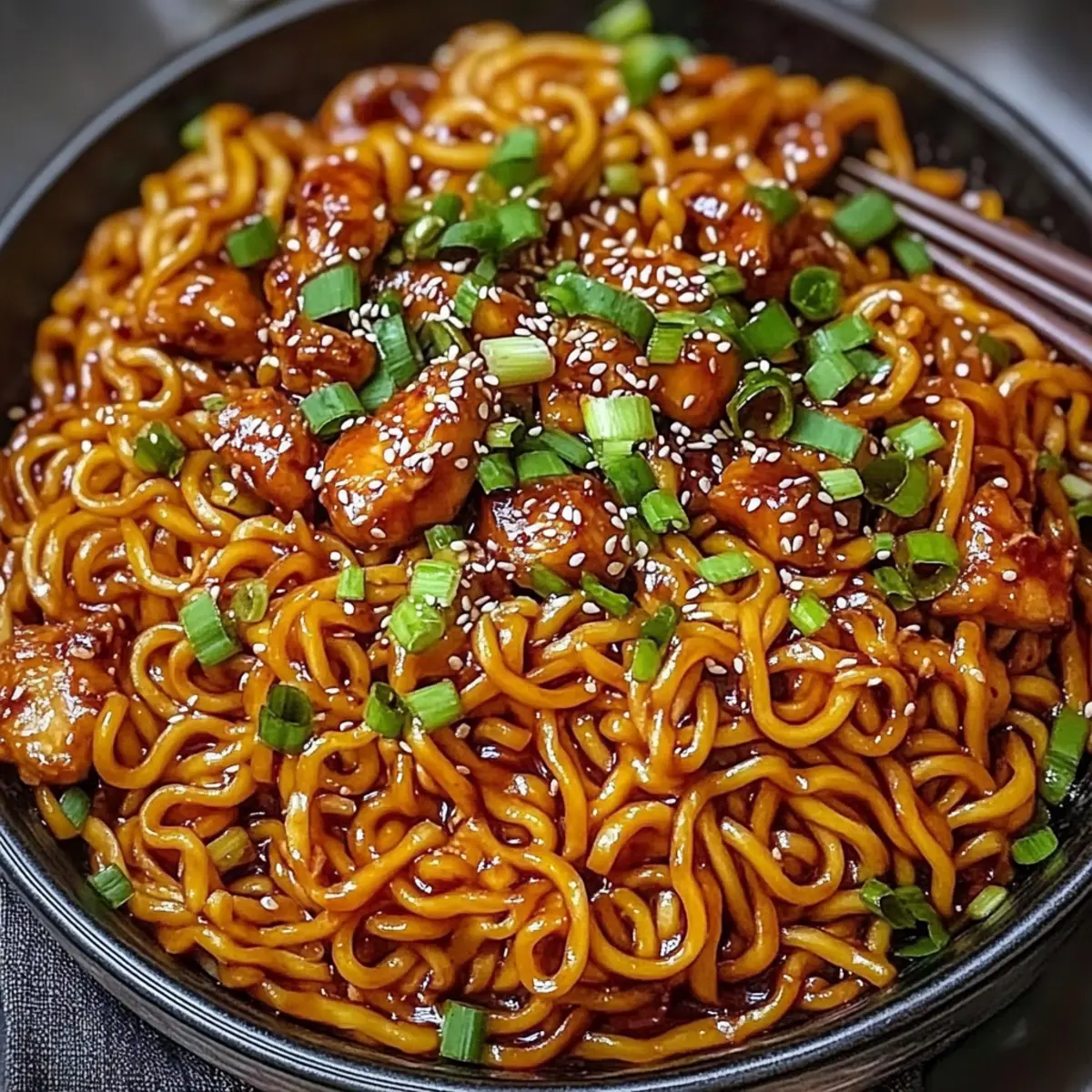
Korean Spicy Chicken Noodles Recipe FAQs
What type of noodles are best for Korean Spicy Chicken Noodles?
I recommend using fresh ramen or udon noodles for that delightful chewy texture. If you can’t find them, thick spaghetti can make a great substitute, though the cooking time might vary slightly.
How do I store leftover Korean Spicy Chicken Noodles?
Store any leftover noodles in an airtight container in the fridge for up to 3 days to maintain their flavor and prevent drying out. To enjoy them later, simply reheat in a skillet.
Can I freeze Korean Spicy Chicken Noodles?
Absolutely! For best results, store the noodles and sauce separately in airtight containers or freezer bags. They can be frozen for up to 2 months. When you’re ready to enjoy, thaw them overnight in the fridge before reheating.
Why is my gochujang sauce too thick?
If your sauce turns out thicker than expected, don’t worry! Simply add a splash of water or a bit more soy sauce while reheating to achieve your desired consistency. Stir it well to combine.
Is this recipe suitable for vegetarians?
Yes, definitely! You can easily make a vegetarian version of Korean Spicy Chicken Noodles by substituting the chicken with firm tofu. Additionally, be cautious with the gochujang as it may contain fish sauce in some brands—look for a vegetarian label if that’s a concern.
How can I make this dish less spicy?
If you prefer a milder flavor, start with just 2 tablespoons of gochujang and gradually increase to taste. You can also add more brown sugar to balance the heat if it gets too spicy for your liking.
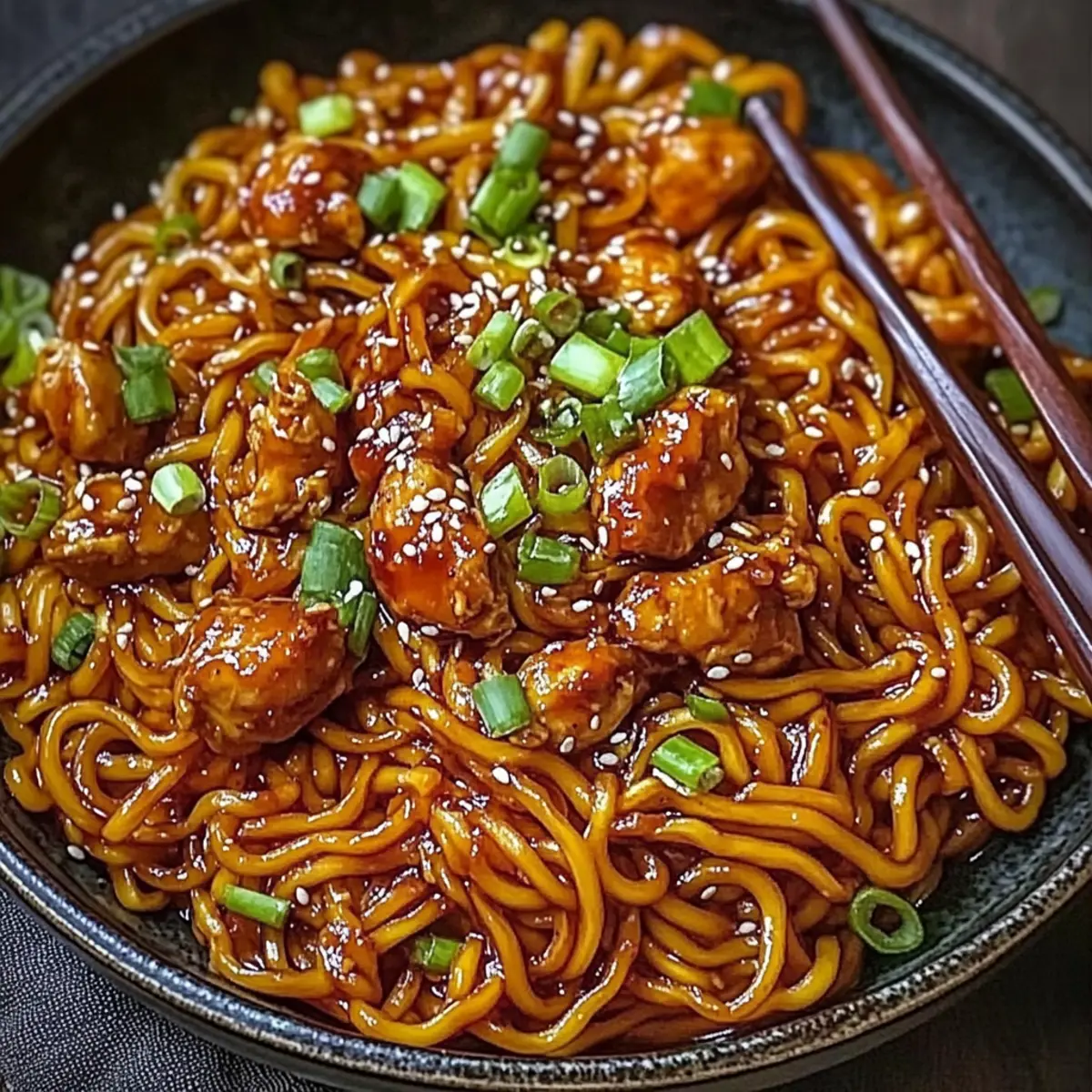
Savor Korean Spicy Chicken Noodles in 30 Minutes or Less
Ingredients
Equipment
Method
- Prepare a large pot of water and bring it to a rolling boil. Cook the fresh ramen or udon noodles according to package instructions, usually around 3-5 minutes, until they're just tender but still chewy. Drain and rinse under cold water.
- In a small bowl, whisk together 2-4 tablespoons of gochujang, soy sauce, brown sugar, sesame oil, and minced garlic until smooth. If thick, add a splash of water.
- Heat a tablespoon of oil in a large skillet. Add in your boneless chicken thighs and cook for 6-8 minutes until golden brown and cooked through (165°F). Flip occasionally.
- Pour the gochujang sauce over the chicken in the skillet. Stir to coat and let it simmer for 2-3 minutes until glossy.
- Add the cooked noodles to the skillet and toss everything together for 1-2 minutes, ensuring the noodles are well coated and heated through.
- Serve the Korean Spicy Chicken Noodles in bowls, garnishing with freshly chopped scallions and sesame seeds. Enjoy while hot!
Leave a Reply