
With the scent of caramelized garlic and the promise of heat lingering in the air, I couldn’t wait to dive into my kitchen for a cozy night of cooking. Spicy Korean Gochujang Beef Noodles has quickly become my go-to recipe, combining sizzling beef and chewy noodles in a sensational gochujang sauce that packs a delightful punch. Not only is this dish a comforting meal that warms the soul, but it also offers flexibility with protein choices, allowing you to swap beef for chicken, shrimp, or even tofu to suit your cravings. Perfect for a weeknight dinner or impressing guests, this recipe brings the vibrant touches of Korean cuisine straight to your table. Are you ready to spice up your cooking routine? Let’s get started!
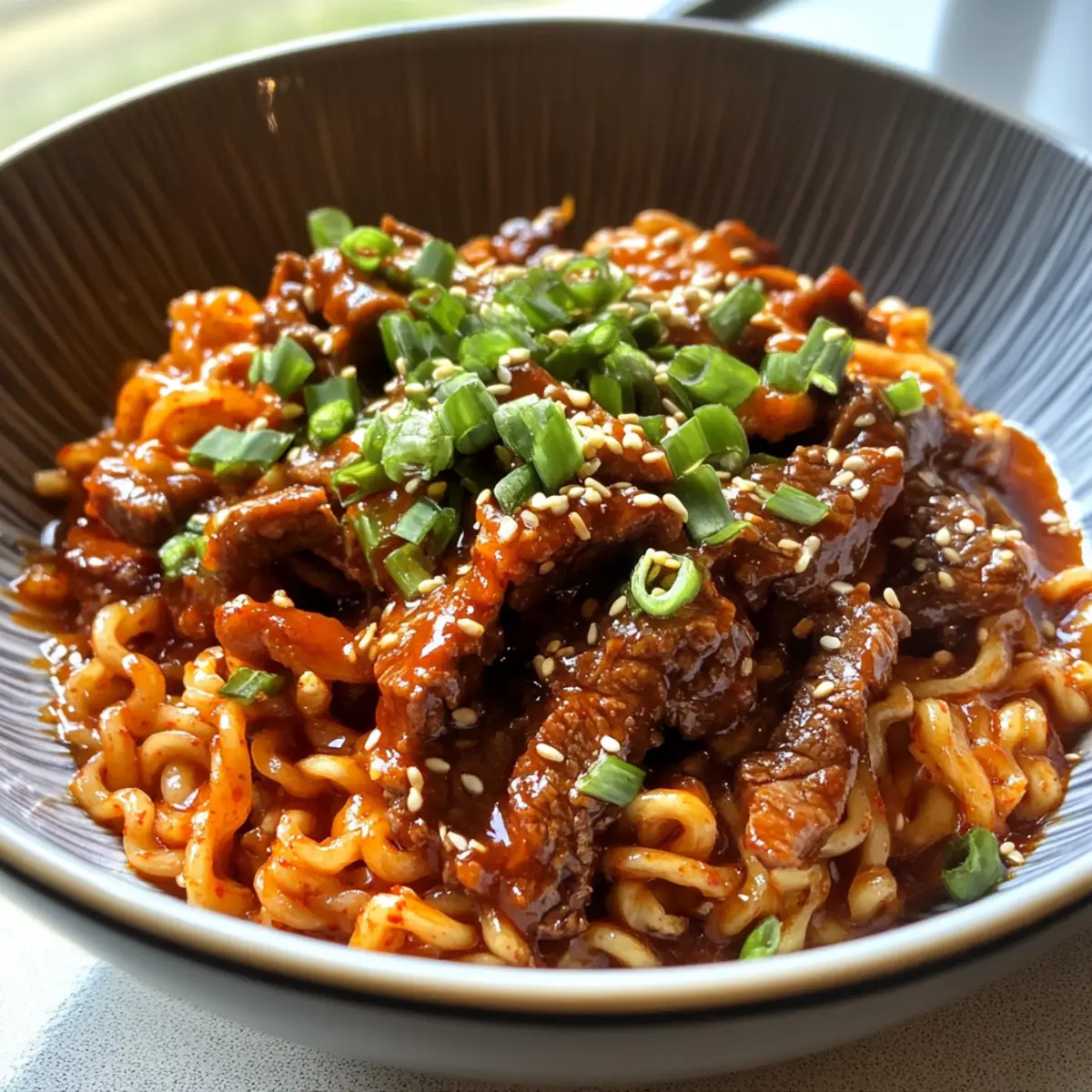
Why Are These Noodles So Irresistible?
Bold flavors come together in a unique blend of spicy gochujang and savory beef, creating an unforgettable taste experience. Customizable proteins mean you can easily craft this dish with beef, chicken, shrimp, or even tofu—perfect for accommodating any dietary preference! Quick to prepare, you’ll have a delicious meal on the table in under 30 minutes, making it ideal for busy weeknights. Crowd-pleaser appeal ensures that friends and family will come back asking for more, especially when paired with sides like kimchi or a refreshing cucumber salad. With this Spicy Korean Gochujang Beef Noodles recipe, you’ll be in for a comforting and exciting dinner!
Korean Gochujang Beef Noodles Ingredients
• Here’s everything you need to make these delicious noodles!
For the Beef
- Beef Sirloin – Tender meat that imparts a hearty flavor; chicken or tofu can be great alternatives.
For the Stir-Fry
- Vegetable Oil – Ideal for frying and achieving a crisp texture; canola or olive oil works well too.
- Garlic – Adds a burst of aromatic depth; fresh garlic is recommended for the best flavor.
- Onion – Provides natural sweetness and moisture; yellow or red onions are excellent choices.
- Red Bell Pepper – Introduces vibrant color and crunch; feel free to substitute with other bell peppers or vegetables.
For the Sauce
- Soy Sauce – Delivers that essential umami flavor; opt for low-sodium for a healthier choice.
- Brown Sugar – Balances the heat from gochujang; honey or maple syrup can also work well as substitutes.
- Gochujang (Korean chili paste) – The star of the show that brings heat and depth; adjust the quantity based on your spice preference.
- Sesame Oil – Adds a delightful nutty flavor; substitute it with another oil if necessary.
- Rice Vinegar – Offers a tangy acidity; apple cider or white vinegar can be good replacements.
For the Noodle Base
- Cooked Noodles – The foundational element of the dish; any noodle type works, including rice noodles or spaghetti.
For Garnish
- Sesame Seeds – Adds a lovely crunch and visual appeal; toasted sesame seeds are a great choice too.
- Green Onions – Enhances the dish’s freshness; use chopped green onions for a pop of color and flavor.
Step‑by‑Step Instructions for Korean Gochujang Beef Noodles
Step 1: Prep Your Ingredients
Begin by preparing all your ingredients to make your cooking process smooth. Thinly slice the beef sirloin into strips and set aside. Mince a few cloves of garlic and chop one onion into small pieces. Dice a vibrant red bell pepper and gather your cooked noodles. Having everything ready will streamline making your delicious Korean Gochujang Beef Noodles.
Step 2: Heat the Oil
In a large skillet or wok, heat 2 tablespoons of vegetable oil over medium-high heat. Allow the oil to shimmer, indicating it’s hot enough for frying. This step is crucial to achieve that satisfying crispy texture for the beef. Once the oil is ready, you’re all set to add your marinated meat for a beautiful sear.
Step 3: Cook the Beef
Add the sliced beef sirloin to the hot skillet in a single layer. Sear the beef for 3-4 minutes until it turns brown and develops a nice crust. Don’t overcrowd the skillet, as this can steam the meat instead of frying it. Once nicely browned, remove the beef from the skillet and set it aside on a plate while you continue with the vegetables.
Step 4: Sauté the Aromatics
In the same skillet, add the minced garlic and chopped onion. Sauté for 1-2 minutes until fragrant and the onions begin to soften, stirring frequently to prevent the garlic from burning. This step enhances the flavor of the dish and prepares the base for the colorful vegetables that follow, keeping the spirit of Korean Gochujang Beef Noodles vibrant.
Step 5: Add the Vegetables
Now, toss in the diced red bell pepper and sauté for an additional 2-3 minutes until tender-crisp. The bell pepper will add a beautiful pop of color and a sweet crunch to your noodles. Continue stirring frequently, ensuring all your vegetables blend to form the aromatic foundation of your spicy noodle dish.
Step 6: Make the Sauce
In a separate bowl, whisk together 3 tablespoons of soy sauce, 1 tablespoon of brown sugar, 2 tablespoons of gochujang, 1 tablespoon of sesame oil, and 1 tablespoon of rice vinegar. Mix until smooth. This sauce is the heart of your Korean Gochujang Beef Noodles, delivering the perfect balance of sweet, spicy, and savory flavors.
Step 7: Combine Sauce and Beef
Pour the prepared sauce into the skillet with the sautéed vegetables, stirring well to combine. Let the mixture simmer for about 1-2 minutes, allowing the flavors to meld together and coat the veggies evenly in that glorious glaze. Then, return the browned beef to the skillet, tossing everything to ensure it’s well-coated in the flavorful sauce.
Step 8: Mix in the Noodles
Add your cooked noodles directly to the skillet, gently tossing everything together. Allow the noodles to heat through for about 2-3 minutes, mixing thoroughly so that they absorb the sauce while getting evenly integrated with the beef and vegetables. This is where your Korean Gochujang Beef Noodles come to life as they soak up all that incredible flavor.
Step 9: Garnish and Serve
Finally, sprinkle sesame seeds and sliced green onions over the top of your beautifully plated Korean Gochujang Beef Noodles. Serve hot, and watch as your family or guests delight in the spicy, comforting flavors you’ve created. Enjoy this satisfying and colorful meal that’s sure to please everyone at the table!
Make Ahead Options
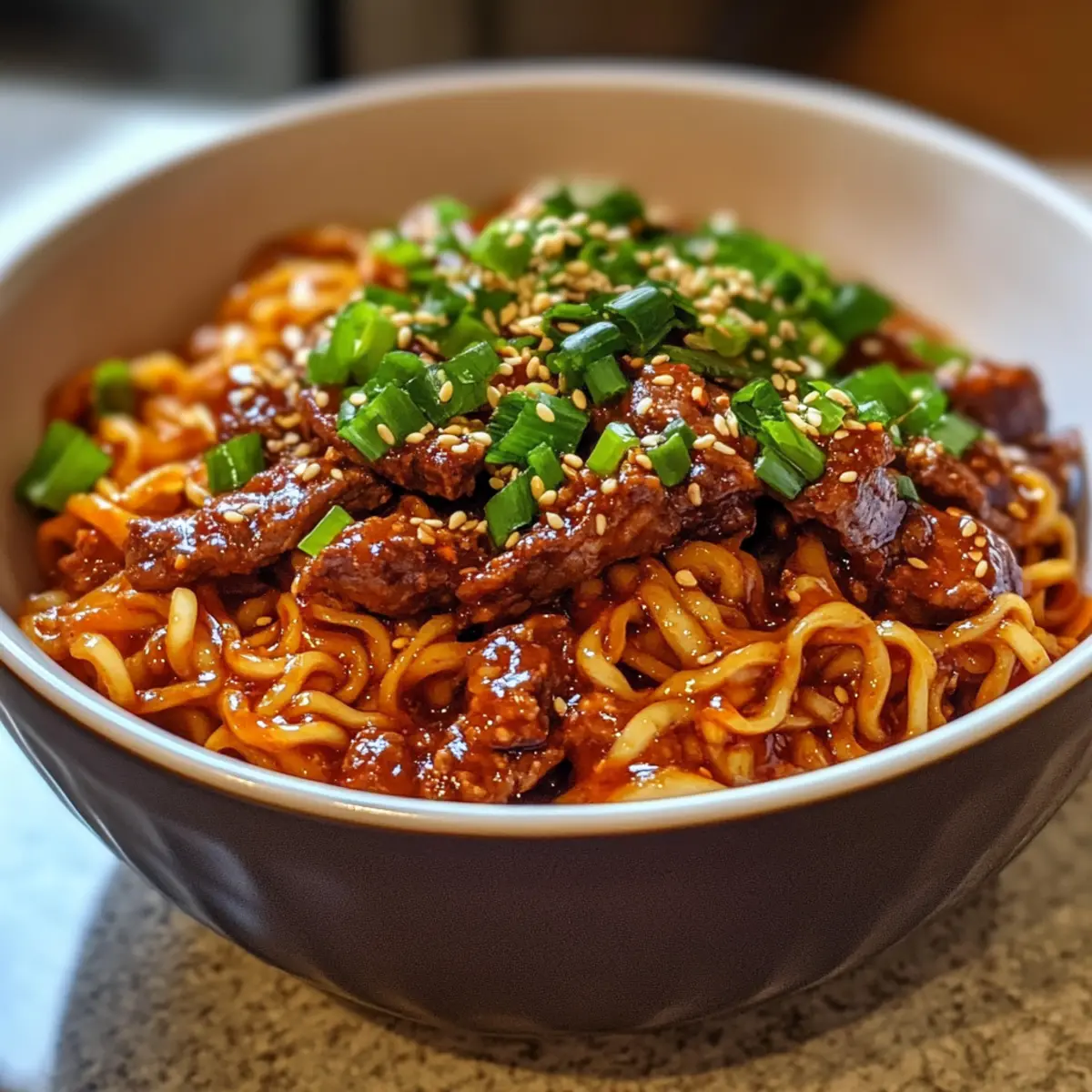
For busy home cooks, these Spicy Korean Gochujang Beef Noodles offer fantastic make-ahead potential! You can slice the beef and chop the vegetables up to 24 hours in advance, storing them in airtight containers in the refrigerator to preserve freshness. Additionally, you can prepare the sauce ahead of time, keeping it in a sealed jar for up to 3 days to allow the flavors to meld beautifully. When it’s time to serve, simply sauté your aromatics, add the prepped beef and vegetables, and finish the dish by incorporating the pre-made sauce and cooked noodles. This method saves you precious time on a busy weeknight while ensuring your meal is just as delicious!
Expert Tips for Korean Gochujang Beef Noodles
- Marinate for Flavor: Allow the beef to marinate in soy sauce for at least 30 minutes before cooking to enhance the savoriness of your Korean Gochujang Beef Noodles.
- Adjust Spice Level: If you’re unsure about the heat, start with less gochujang and add gradually until you reach your desired spice level—balance is key!
- Avoid Overcrowding: Cook the beef in batches if your skillet is too small; overcrowding can lead to steaming instead of searing, impacting the dish’s texture.
- Use Fresh Ingredients: Fresh garlic and vegetables make a world of difference in flavor; always choose the freshest ingredients you can find for the best results.
- Customize Veggies: Feel free to toss in your favorite vegetables like snap peas or broccoli for added nutrition and variety in your Korean Gochujang Beef Noodles!
Storage Tips for Korean Gochujang Beef Noodles
Fridge: Store leftovers in an airtight container for up to 3-4 days. This keeps your Korean Gochujang Beef Noodles fresh and ready to enjoy over the following days.
Freezer: For longer storage, freeze portions in a freezer-safe container for up to 2 months. Be sure to cool the noodles completely before sealing to maintain texture.
Reheating: Gently reheat in a skillet over medium heat, adding a splash of water or broth to help restore moisture. Stir occasionally until heated through, ensuring a deliciously warm meal.
What to Serve with Spicy Korean Gochujang Beef Noodles
Nothing complements a vibrant bowl of spicy noodles quite like some delightful side dishes that enhance the meal experience.
- Kimchi: This traditional fermented side adds a flavorful tang and a spicy crunch, offering a perfect contrast to the savory noodles.
- Cucumber Salad: A light, refreshing salad with crispy cucumbers and rice vinegar brings coolness to balance the heat of the noodles beautifully.
- Vegetable Stir-Fry: A colorful medley of snap peas, bell peppers, and broccoli tossed in soy sauce makes for an exciting, crunchy addition to your meal.
- Steamed Bok Choy: Fresh bok choy, lightly steamed and drizzled with sesame oil, adds a lovely green element, enriching both texture and flavor profiles.
- Miso Soup: This warm bowl of umami-rich broth contrasts the spiciness of the beef noodles, providing warming comfort before diving into the main dish.
- Soju or Asian Beer: A chilled glass of soju or a light Asian beer can offset the heat with refreshing notes, enhancing your dining experience.
Korean Gochujang Beef Noodles Variations
Feel free to get creative with these mouthwatering variations that can cater to every taste and preference!
-
Chicken Swap: Use sliced chicken breast instead of beef for a lighter option. This is perfect if you’re craving a change but still want that satisfying flavor.
-
Shrimp Delight: For seafood lovers, substitute the beef with succulent shrimp. Just add them towards the end of cooking to keep them tender and juicy.
-
Tofu Twist: Make it vegetarian by swapping the beef for firm tofu or tempeh, adding a different texture and allowing it to soak up that rich gochujang sauce.
-
Add More Veggies: Toss in snap peas, carrots, or mushrooms for extra crunch and nutrition. These vibrant veggies complement the dish beautifully and boost its health quotient.
-
Soba Noodles: Switch your usual noodles for soba noodles for a nutty flavor and hearty bite. They bring a delightful twist and elevate traditional flavors.
-
Spicy Kick: If you’re a heat seeker, consider adding chili flakes or sliced fresh chilies to amplify the spice. Nothing like a fiery punch to awaken those taste buds!
-
Chilled Salad Version: Transform the leftovers into a Spicy Noodle Salad. Mix with fresh veggies, sliced cucumber, and a drizzle of sesame dressing for a refreshing summer meal.
-
Sesame Crunch: For added texture, sprinkle toasted sesame seeds on top and mix in some crispy fried shallots. These toppings make every bite blissfully crunchy!
If you’re looking for more delicious ideas, try out my Beef Enchiladas Homemade or shake it up with a one-pan dish like One Pot Beef. Happy cooking!
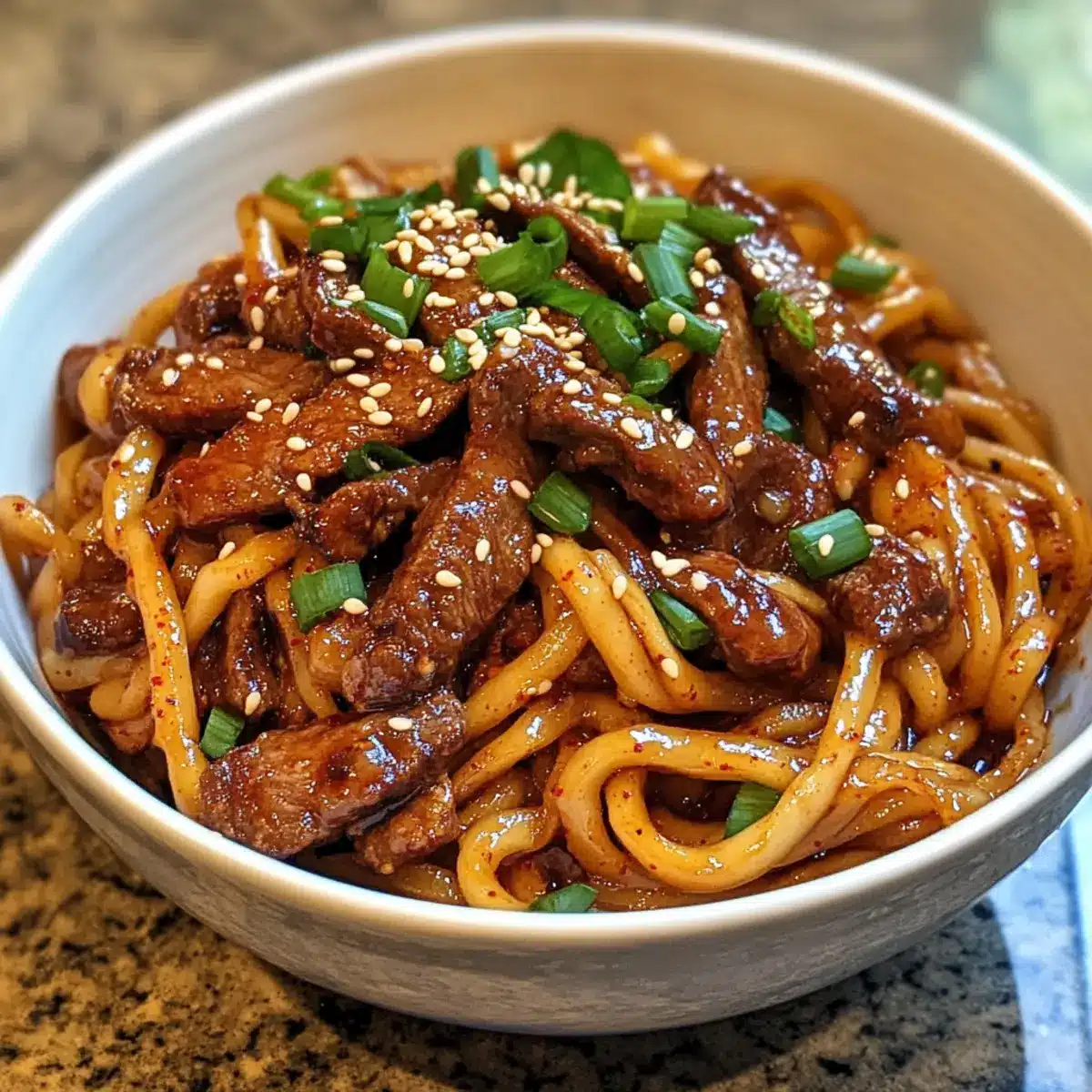
Korean Gochujang Beef Noodles Recipe FAQs
How do I choose the right beef for this dish?
Choosing a good cut of beef is essential for achieving tenderness. I recommend using beef sirloin, as it offers a rich yet delicate flavor profile. Look for cuts that are bright red with minimal dark spots, indicating freshness. If you want alternatives, chicken or firm tofu can make excellent substitutes while keeping the flavor profile intact.
What’s the best way to store leftover Korean Gochujang Beef Noodles?
To keep your delicious noodles fresh, store any leftovers in an airtight container in the fridge. They can last for 3-4 days if stored properly. Just be sure to let them cool to room temperature before sealing to prevent condensation, which can make the noodles soggy.
Can I freeze Korean Gochujang Beef Noodles for later?
Absolutely! Freezing is a great option for leftovers. First, allow the noodles to cool completely. Then, portion them into freezer-safe containers or bags, making sure to leave some space for expansion. They can be frozen for up to 2 months. When you’re ready to enjoy them again, thaw in the fridge overnight and reheat gently in a skillet to restore their delightful texture.
What if my gochujang sauce is too spicy?
If you find that your sauce is a little too fiery, don’t worry! You can balance the heat by adding more brown sugar or honey, which will sweeten the sauce and counteract the spice. Alternatively, try mixing in a little extra soy sauce to dilute the heat without losing flavor. Taste as you go until you reach the perfect level of spice that suits your palate!
Are there any dietary considerations I should be aware of?
Certainly! If you’re cooking for someone with allergies, be cautious with the soy sauce due to its wheat content—gluten-free soy sauce is available for those with gluten sensitivities. Additionally, for a vegetarian option, swapping out beef for tofu, tempeh, or even seitan will keep the meal satisfying without sacrificing flavor. Always check ingredient labels for hidden allergens!
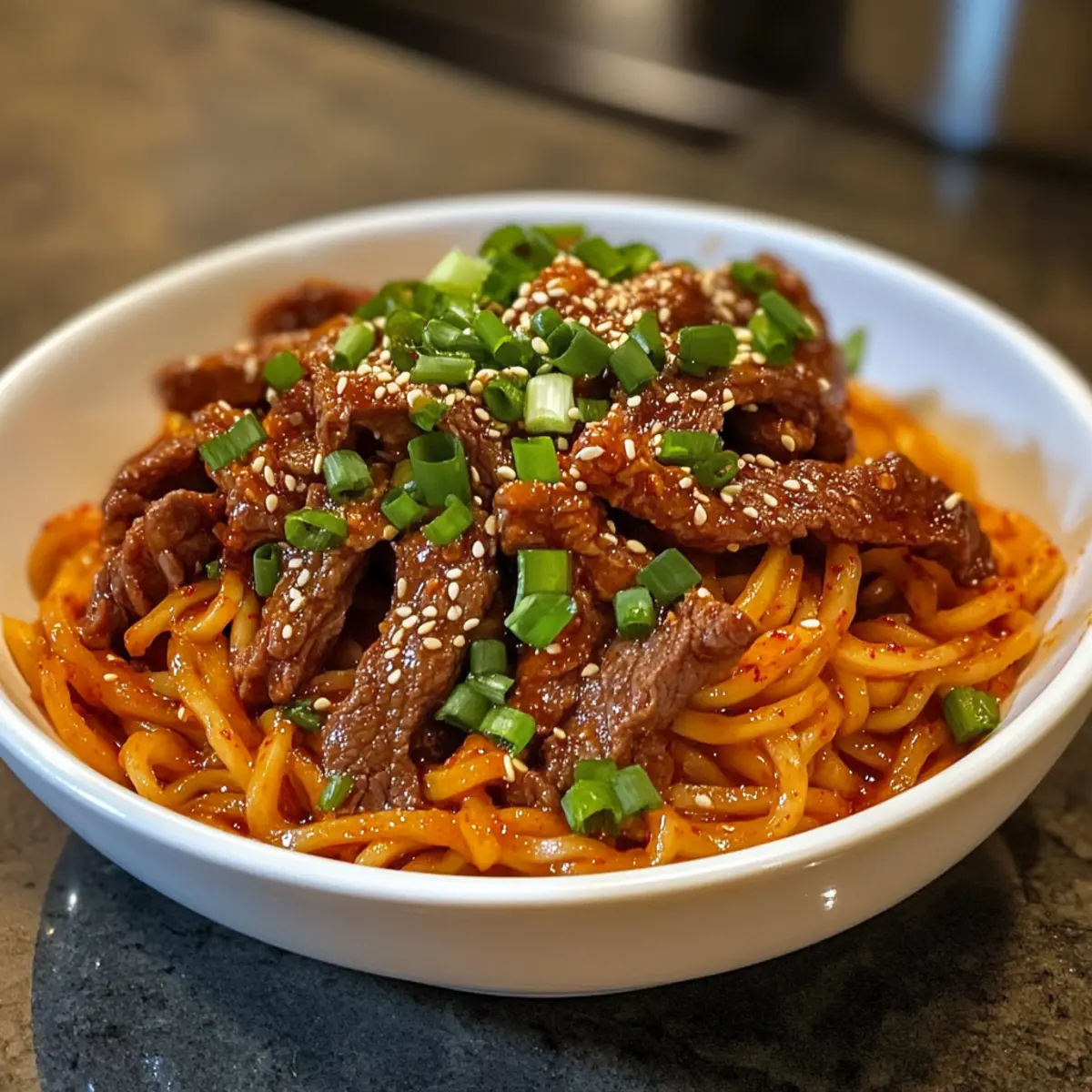
Korean Gochujang Beef Noodles: A Spicy Comfort Classic
Ingredients
Equipment
Method
- Begin by preparing all your ingredients to make your cooking process smooth. Thinly slice the beef sirloin into strips and set aside. Mince a few cloves of garlic and chop one onion into small pieces. Dice a vibrant red bell pepper and gather your cooked noodles.
- In a large skillet or wok, heat 2 tablespoons of vegetable oil over medium-high heat until the oil shimmers.
- Add the sliced beef sirloin to the hot skillet in a single layer. Sear the beef for 3-4 minutes until it turns brown and develops a nice crust.
- In the same skillet, add the minced garlic and chopped onion. Sauté for 1-2 minutes until fragrant and the onions begin to soften.
- Toss in the diced red bell pepper and sauté for an additional 2-3 minutes until tender-crisp.
- In a separate bowl, whisk together 3 tablespoons of soy sauce, 1 tablespoon of brown sugar, 2 tablespoons of gochujang, 1 tablespoon of sesame oil, and 1 tablespoon of rice vinegar until smooth.
- Pour the prepared sauce into the skillet with the sautéed vegetables, stirring well to combine. Let the mixture simmer for about 1-2 minutes.
- Return the browned beef to the skillet, tossing everything to ensure it's well-coated in the flavorful sauce.
- Add your cooked noodles directly to the skillet, gently tossing everything together for about 2-3 minutes.
- Finally, sprinkle sesame seeds and sliced green onions over the top of your plated Korean Gochujang Beef Noodles, serve hot.
Leave a Reply