
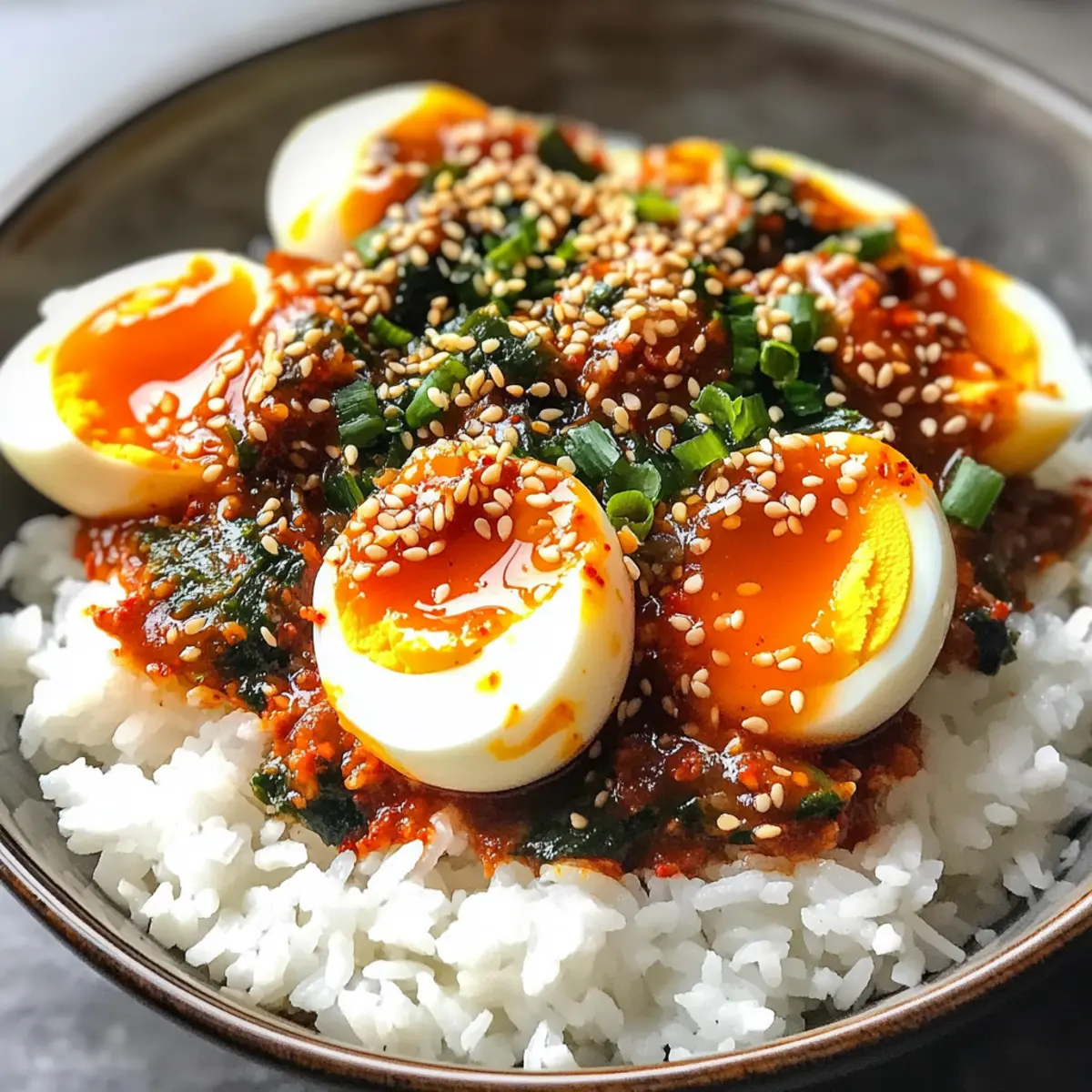
As the rich aroma of sautéed garlic fills my kitchen, I’m reminded of the magic that can happen with just a handful of simple ingredients. The star of today’s dish is none other than Spicy Gochujang Eggs—a delightful Korean favorite that marries perfectly boiled eggs in a savory sauce with a fiery kick. Whipping up this dish is not only quick and easy, making it perfect for busy weeknights, but it also offers a crowd-pleasing flavor that’s sure to impress even the most discerning taste buds. Whether you’re a meat-lover or looking for a vegetarian twist, this recipe has options to suit your needs. Ready to elevate your dining experience at home? Let’s dive into this addictive culinary adventure together!
Why Love Spicy Gochujang Eggs?
Quick and Easy: These eggs come together in under 30 minutes, making them an excellent choice for busy weeknights.
Bold Flavors: The combination of gochujang and spices creates a rich, savory delight that will tantalize your taste buds.
Versatile Ingredient Swaps: Whether you stick with ground beef or opt for turkey or tofu, this recipe offers flexibility to suit your tastes.
Perfect Pairing: Serve your Spicy Gochujang Eggs over hot steamed rice for a complete meal that feels both comforting and satisfying.
Heartwarming Comfort Food: Enjoy every bite of these soft-boiled eggs enveloped in a flavorful sauce, reminiscent of cherished Korean flavors. If you’re also craving more spice, check out my Dragon Chicken Spicy for a fiery twist!
Spicy Gochujang Eggs Ingredients
For the Sauce
- Korean Chili Paste (Gochujang) – Adds essential heat and sweetness, making it the star of the dish.
- Korean Chili Pepper Flakes (Gochugaru) – Offers an extra kick and vibrant color to enhance the sauce.
- Soy Sauce – Provides an umami depth that balances the spiciness beautifully.
- Oyster Sauce – Enhances the richness; feel free to omit for a vegetarian version.
- Chicken Bouillon Powder – Infuses umami; can be swapped with vegetable bouillon for a non-meat option.
- Sugar – Balances the heat and enhances the flavors; try using alternative sweeteners if preferred.
- Honey – A natural way to bring sweetness that complements the savory notes beautifully.
- Black Pepper – Adjust the seasoning to your taste with this classic ingredient.
For the Eggs and Cooking
- Large Eggs – Choose fresh eggs for the best texture; they should be soft-boiled for this recipe.
- Neutral-Tasting Oil – Essential for frying, any light oil will work perfectly here.
- Hot Steamed Rice – Serves as a comforting base for your eggs; practically any type will do.
- Toasted Sesame Oil – Provides a nutty flavor that elevates the dish; can be reduced if desired.
- Toasted Sesame Seeds – Used for garnish, adding a delightful crunch that contrasts with the soft eggs.
For the Vegetables
- Green Onions – Adds freshness and flavor; don’t forget to use both white and green parts for extra taste.
- Garlic – Brings aromatic depth; using fresh garlic guarantees the best flavor.
- Green Chili Pepper (optional) – Introduces heat; omit if you prefer a milder dish.
- Mild Red Chili Pepper (or Bell Pepper) – Adds sweetness and colorful appeal; can swap for capsicum if less heat is desired.
With these ingredients in hand, you’re all set to create a vibrant, spicy masterpiece in your kitchen. Get ready to impress family and friends with these Spicy Gochujang Eggs that truly celebrate the heart and soul of Korean cuisine!
Step‑by‑Step Instructions for Spicy Gochujang Eggs
Step 1: Prepare the Vegetables
Start by washing and slicing the green onions, separating the white and green parts for later use. Chop the garlic finely to release its aromatic oils, and if you enjoy a spicy kick, slice the green chili pepper as well. This fresh mix will enhance the flavors in your Spicy Gochujang Eggs, bringing a delightful crunch and vibrant color to the dish.
Step 2: Make the Seasoning Paste
In a small bowl, combine the gochujang, gochugaru, soy sauce, oyster sauce, chicken bouillon powder, sugar, honey, and a pinch of black pepper. Whisk together until smooth, ensuring the ingredients are well-blended. Set this flavorful paste aside as it will contribute the key savory and spicy elements to your Spicy Gochujang Eggs.
Step 3: Boil the Eggs
In a large pot, bring 8 cups of water to a rolling boil over medium-high heat. Carefully add your cold large eggs to the boiling water, gently stirring to keep the yolks centered. Boil for exactly 7 minutes for perfectly soft-boiled eggs. Once done, transfer them into an ice water bath for a few minutes to halt the cooking process before peeling and setting them aside.
Step 4: Cook the Beef
Heat a splash of neutral-tasting oil in a large skillet over medium heat. Add the ground beef to the pan, breaking it apart with a spatula, and cook until it’s browned and no longer pink, about 5-7 minutes. Next, toss in the white parts of the green onions and chopped garlic, stir-frying everything together for about a minute, allowing the garlic to soften and release its aromatic fragrance.
Step 5: Add the Seasoning
Reduce the heat to low, then pour the seasoning paste over the cooked beef mixture. Sauté everything together for 2 minutes, ensuring that the beef absorbs the rich flavors from the Spicy Gochujang sauce. You’ll want the mixture to be fragrant and well-coated, forming a delicious base for your simmering eggs.
Step 6: Simmer the Eggs
Pour in the remaining water to create a saucy consistency, bringing it to a gentle simmer. Carefully slide in the peeled soft-boiled eggs, allowing them to simmer in the flavorful broth for another 7 minutes. This step infuses the eggs with spice and ensures each bite is bursting with the distinct taste of Spicy Gochujang Eggs.
Step 7: Final Touches
After simmering, stir in the remaining green onion tops, sliced chili peppers (if using), toasted sesame oil, and a sprinkle of sesame seeds. This enhances both the flavor and the presentation of your dish. Allow everything to meld together for a couple of minutes, ensuring the eggs are well-coated and aromatic.
Step 8: Serve
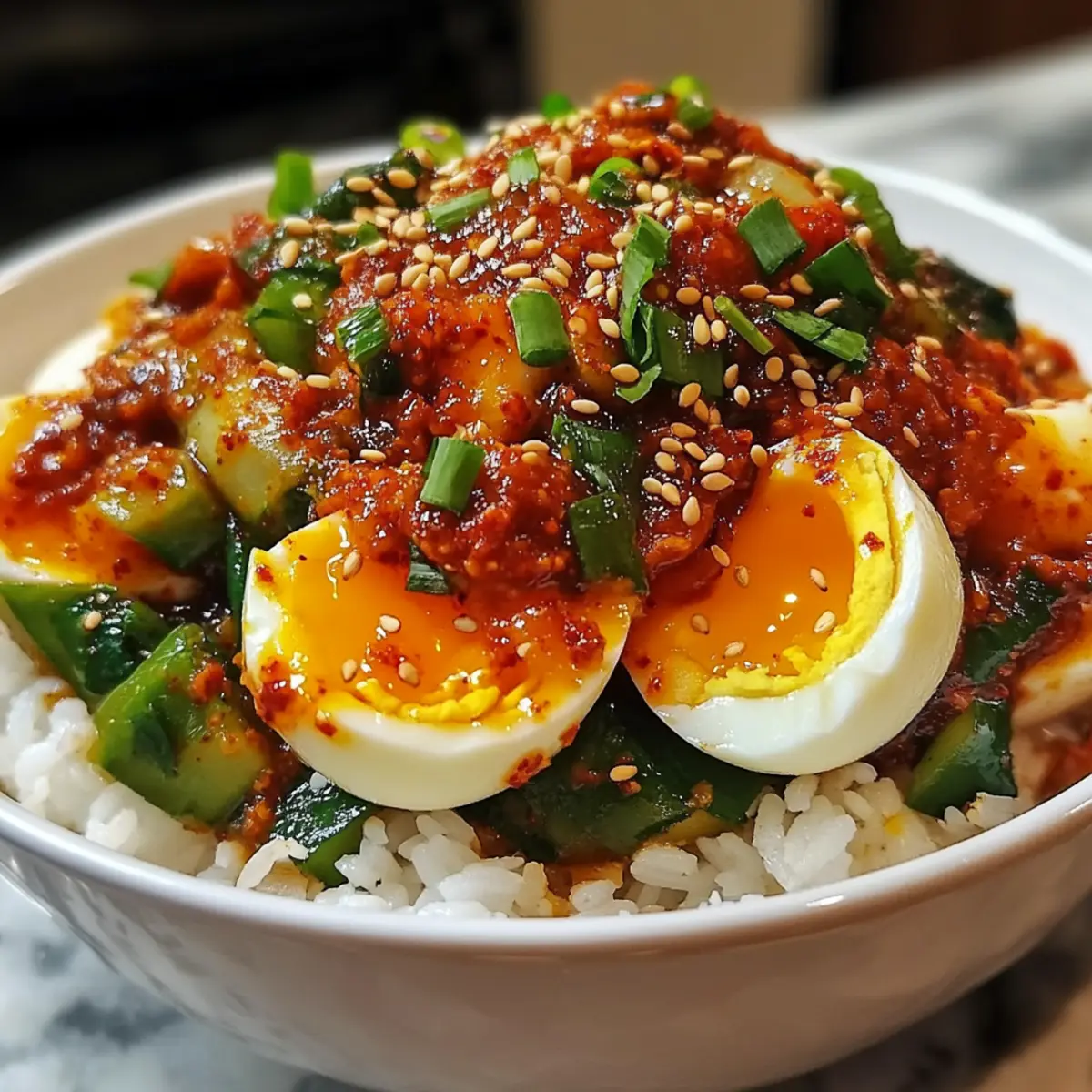
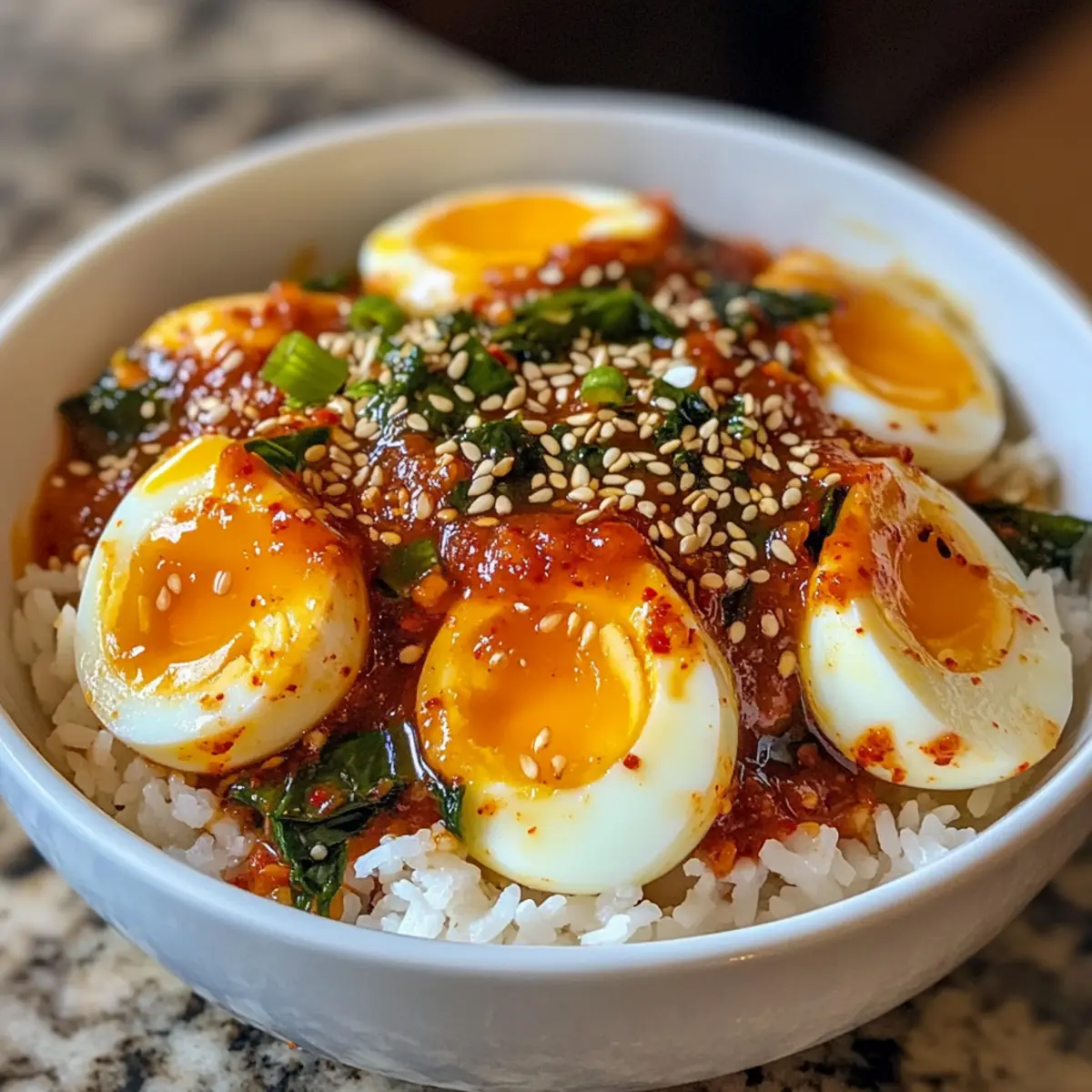
To plate your Spicy Gochujang Eggs, scoop a generous portion of hot steamed rice onto each plate and nestle the simmered eggs over the top. Drizzle with the rich sauce from the skillet, making sure to include the savory bits of beef and vegetables. Your vibrant meal is ready to be savored!
Expert Tips for Spicy Gochujang Eggs
-
Egg Temperature Matters: Start with cold eggs to help keep the yolks centered while boiling, ensuring that every soft bite is perfect.
-
Simmer Slowly: Take your time during the simmering process. This step allows the flavors of the sauce to meld beautifully with the eggs for an irresistible taste.
-
Adjust Spice Level: Modify the heat by reducing or omitting the chili peppers based on your preference, making these Spicy Gochujang Eggs suitable for everyone at your table.
-
Fresh Ingredients: Use fresh garlic and vegetables to enhance the overall flavor and aroma of the dish, ensuring a delightful experience with every bite.
-
Serving Suggestions: Pair with pickled vegetables on the side for a refreshing contrast to the richness of the sauce and eggs; this adds balance and excitement to your meal.
What to Serve with Spicy Gochujang Eggs?
Create a satisfying meal that harmonizes flavors and textures with these delightful pairings.
- Fluffy Steamed Rice: Acts as the perfect base, soaking up the rich, spicy sauce and balancing the heat of the dish.
- Crispy Pickled Vegetables: Their acidity offers a refreshing contrast, enhancing the overall experience with delightful crunch and tang.
- Kimchi: This classic Korean side brings additional fermented flavors and spiciness, making it a natural match with your flavorful eggs.
- Sauteed Greens: Lightly sautéed spinach or bok choy adds a touch of greenery, offering a tender, slightly bitter counterpart to the savory eggs.
- Chilled Noodle Salad: A refreshing cold noodle salad dressed with sesame oil complements the richness of the eggs while providing a delightful textural contrast.
- Hot Green Tea: A soothing drink option, green tea helps cleanse the palate and enhances the meal with its earthy notes.
- Dessert: Serve with a sweet matcha mousse or a fruity sorbet for a light and lovely finish to the meal.
- Sesame-Watermelon Salad: A bright and vibrant salad that adds a refreshing sweetness, making every bite pop with freshness and hydration.
Spicy Gochujang Eggs Variations & Substitutions
Unleash your culinary creativity with these delightful twists on the classic Spicy Gochujang Eggs to suit your taste.
-
Vegetarian Option: Swap ground beef for crumbled tofu or tempeh to create a protein-packed vegetarian version that’s still deliciously hearty.
-
Heat Adjustment: For a milder dish, omit the green chili pepper and reduce the gochugaru, ensuring everyone enjoys it to the fullest.
-
Quail Eggs: Elevate your experience by using quail eggs in place of regular large eggs for a gourmet touch that marries beautifully with the sauce.
-
Flavor Boost: Add a tablespoon of kimchi to the sauce for an explosion of fermented goodness and extra depth of flavor. It’s a perfect pairing that takes the dish to new heights.
-
Sweetness Swap: For an alternative sweet component, replace honey with maple syrup or agave. This adds a unique, complex sweetness that complements the spicy notes.
-
Rice Variety: Instead of traditional white or brown rice, serve your eggs over quinoa or cauliflower rice for a fun twist and added nutrition.
-
Sauce Variations: Experiment with a splash of coconut milk for a creamy texture in the sauce, which mellows the spiciness while adding a delightful richness.
-
Garnish Enhancements: Top your Spicy Gochujang Eggs with chopped cilantro or green cilantro for a refreshing herbal nuance that brightens every bite.
Each of these variations allows you to embrace your preferences while still enjoying the comforting essence of Spicy Gochujang Eggs. If you’re in the mood for an additional kick of spice, don’t miss out on my Spicy Southern Cheesy recipe, perfect for those seeking something truly fiery.
How to Store and Freeze Spicy Gochujang Eggs
Fridge: Store leftover Spicy Gochujang Eggs in an airtight container for up to 3 days. The flavors will continue to develop, making for an even tastier reheat!
Freezer: If you’d like to freeze the dish, separate the eggs from the sauce and store each in airtight containers for up to 1 month. Reheat the sauce on the stove while gently warming the eggs in a microwave or warm water bath.
Reheating: For best results, reheat the eggs gently in the microwave or on a skillet with a splash of water, ensuring they do not overcook and lose that perfect soft-boiled texture.
Make-Ahead Tip: You can prepare the sauce in advance and store it in the fridge for up to a week, making it even easier to whip up Spicy Gochujang Eggs on a busy day!
Make Ahead Options
These Spicy Gochujang Eggs are ideal for meal prep enthusiasts looking to save time on busy weeknights! You can prep the seasoning paste (just combine gochujang, soy sauce, and the rest) up to 3 days in advance and store it in the refrigerator. Moreover, the soft-boiled eggs can be made 24 hours ahead, and simply keep them in their shells in the fridge to maintain their freshness. When it’s time to enjoy, just simmer the prepped eggs in the sauce for about 7 minutes to heat through, ensuring they soak up all the delicious flavors. In this way, you’ll savor a comforting meal without the hassle, all while preserving the quality you love!
Spicy Gochujang Eggs Recipe FAQs
How do I choose the best eggs for this recipe?
Absolutely! For the best results, select fresh, large eggs. They should be clean, with no cracks or dark spots. A fresh egg will have a firm white and a vibrant yolk, which is perfect for achieving that tender, soft-boiled texture that is the hallmark of Spicy Gochujang Eggs.
What is the best way to store leftovers?
You can store leftover Spicy Gochujang Eggs in an airtight container in the fridge for up to 3 days. The flavors will actually deepen, making it an even more delightful meal upon reheating. Always let them cool to room temperature before sealing to prevent condensation.
Can I freeze Spicy Gochujang Eggs?
Yes, you can! To freeze, separate the eggs from the sauce and place them in airtight containers, keeping each component separate. They will stay fresh in the freezer for up to 1 month. When ready to eat, reheat the sauce on the stove while gently warming the eggs in a microwave or warm water bath to maintain their soft-boiled quality.
How can I adjust the spice level?
Very easily! If you’re looking for a milder flavor, simply reduce or omit the green chili pepper and the amount of gochugaru you add to the sauce. You can also serve the Spicy Gochujang Eggs alongside a side of pickled vegetables, which adds a refreshing contrast to the heat.
Are these eggs safe for my pets?
Generally, cooked eggs can be a great protein source for dogs, but they should be served plain and without any sauces or spices. Unfortunately, gochujang contains ingredients that may not be safe for pets, so it’s best to keep this dish for human enjoyment only!
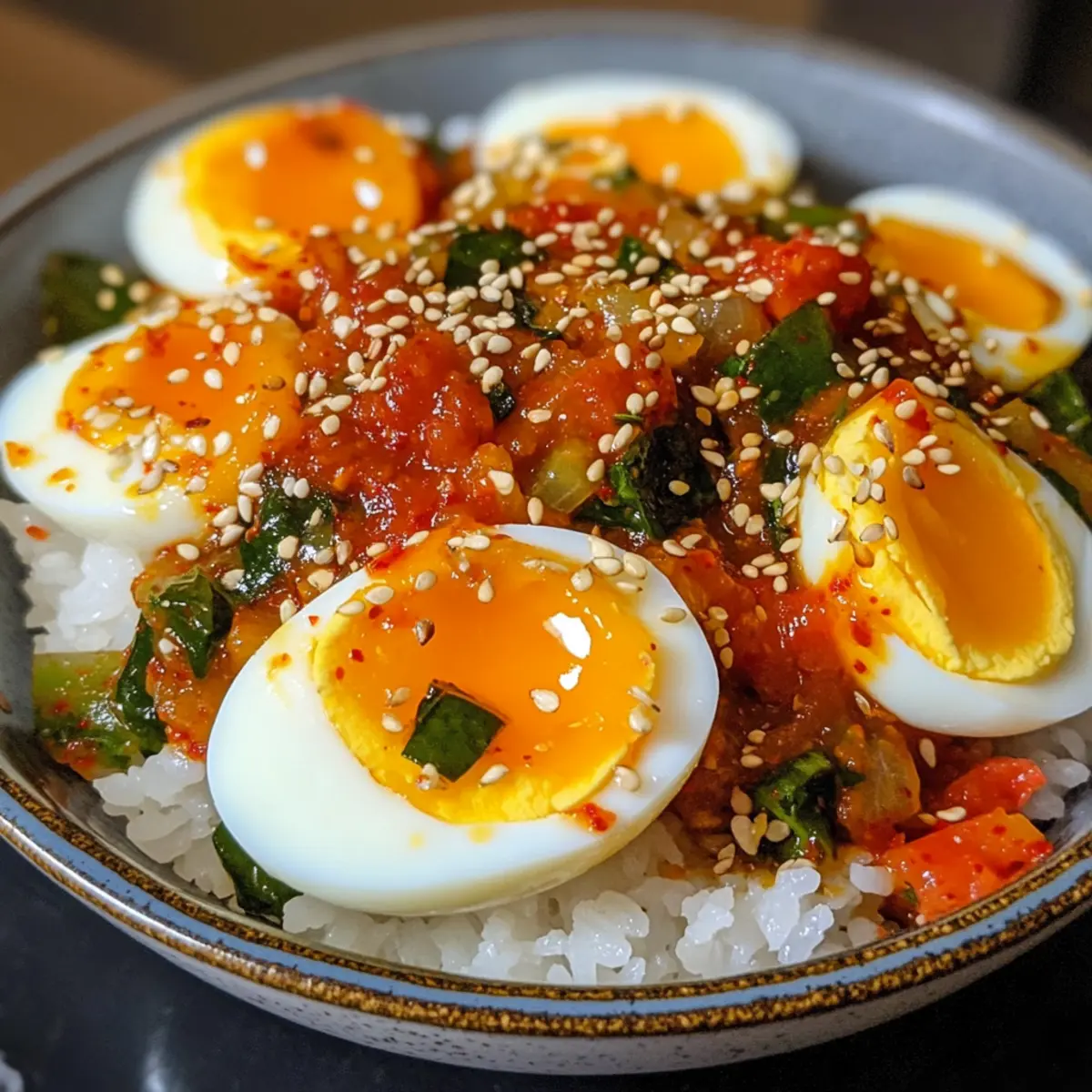
Spicy Gochujang Eggs: Unleash Bold Korean Flavors at Home
Ingredients
Equipment
Method
- Start by washing and slicing the green onions, separating the white and green parts for later use. Chop the garlic finely and slice the green chili pepper if desired.
- In a small bowl, combine the gochujang, gochugaru, soy sauce, oyster sauce, chicken bouillon powder, sugar, honey, and black pepper. Whisk until smooth.
- In a large pot, bring 8 cups of water to a boil. Gently add your eggs, stirring to keep yolks centered. Boil for 7 minutes, then transfer to ice water.
- Heat neutral-tasting oil in a skillet over medium heat. Add ground beef and cook until browned, about 5-7 minutes. Stir in the white parts of green onions and chopped garlic, cooking for another minute.
- Reduce heat to low, then pour the seasoning paste over the beef mixture. Sauté for 2 minutes.
- Pour in remaining water, bring to a simmer, and add peeled eggs. Simmer for 7 minutes.
- Stir in the remaining green onion tops, sliced chili peppers, toasted sesame oil, and sesame seeds. Allow to meld for couple of minutes.
- Scoop hot steamed rice onto plates, nestle simmered eggs on top, and drizzle with sauce.
Leave a Reply