
As the enticing aroma of sesame wafts through my kitchen, I can’t help but feel a wave of nostalgia for family gatherings filled with laughter and delicious food. Japchae, the beloved Korean stir-fried sweet potato noodles, has been my go-to dish for celebrations and cozy dinners alike. This recipe combines chewy glass noodles with tender beef and a vibrant medley of vegetables, all bathed in a savory soy and sesame sauce, making it a showstopper on any table. Not only is Japchae a feast for the eyes, but it’s also customizable to suit various dietary preferences, whether you opt for traditional beef or a delightful tofu twist. Plus, it’s quick to whip up—perfect for busy weeknights! Ready to discover how to create this mouthwatering dish? Let’s dive in!
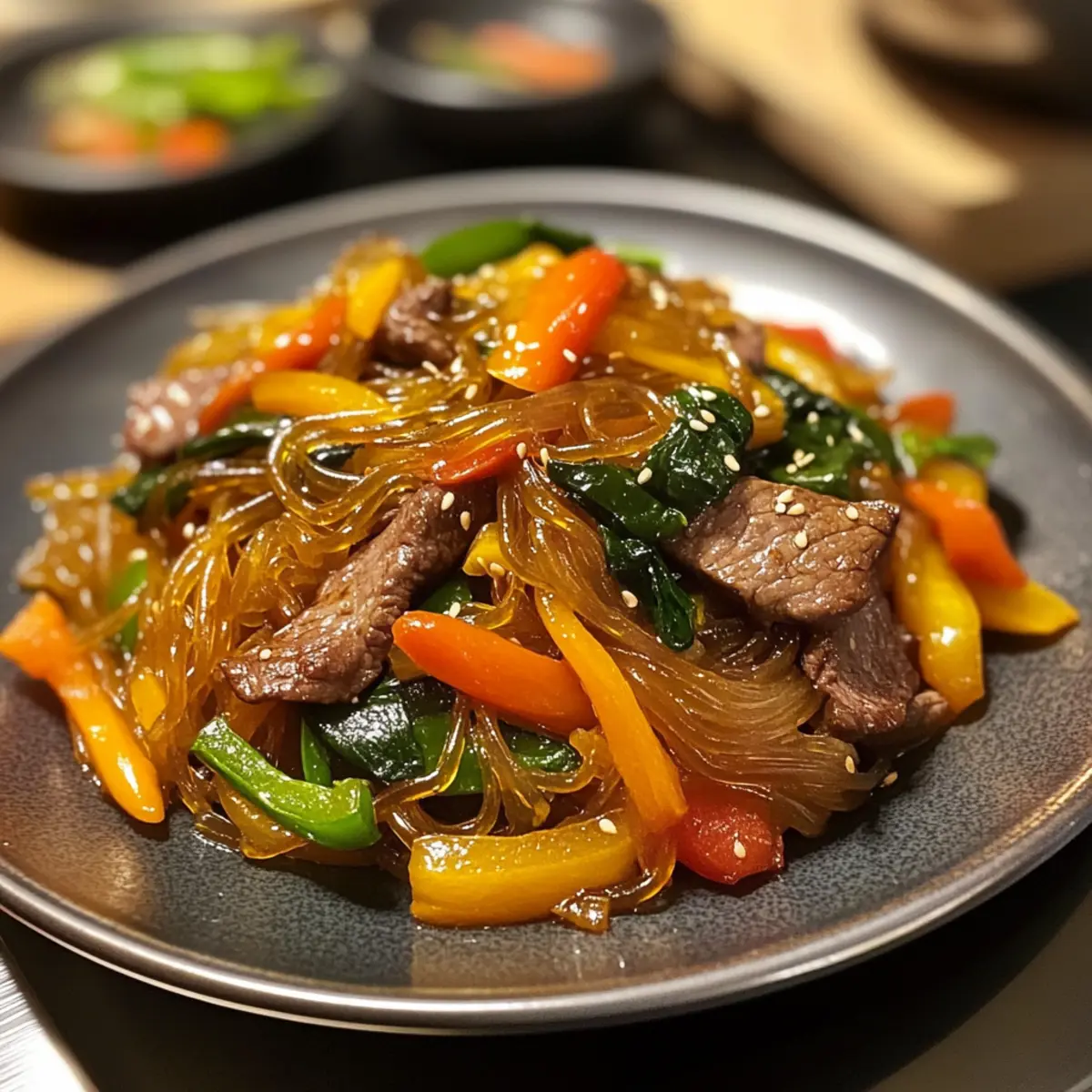
Why is Japchae a Must-Try Recipe?
Irresistible Flavor: The unique blend of sweet potato glass noodles and a rich soy-sesame sauce creates a taste sensation that is simply unforgettable.
Colorful Presentation: With vibrant vegetables and glistening noodles, Japchae is a feast for the eyes that will impress your family and friends.
Quick and Easy: Ready in under 30 minutes, this dish is perfect for busy nights without compromising on quality or taste.
Customizable Delight: Whether you prefer beef, chicken, or tofu, the options are endless, allowing everyone to enjoy their own version of this classic dish.
Crowd-Pleaser: Perfect for gatherings, potlucks, or family dinners, Japchae is sure to become a favorite at any table! For more exciting variations, check out how to add a kick with gochujang.
Japchae Ingredients
• Get ready to create a delicious dish!
For the Noodles
- Sweet Potato Glass Noodles – Essential for that unique chewy texture; be sure to soak them well before cooking.
For the Protein
- Beef (thinly sliced) – Provides a hearty flavor boost; chicken or tofu are great substitutions for a lighter option.
For the Vegetables
- Bell Pepper – Adds vibrant color and crunch; feel free to use red, yellow, or green for variety.
- Carrots – Sweet and nutritious; they also offer a lovely pop of orange to your dish.
- Spinach – Brings a boost of vitamins; you can swap it for bok choy or kale if you prefer.
For the Sauce
- Soy Sauce – The backbone of flavor in Japchae; choose low-sodium for a healthier alternative.
- Sesame Oil – Adds a rich, nutty aroma; olive oil can substitute if needed.
For the Garnish
- Green Onions – Delivers a fresh crunch; consider omitting if allergies are a concern.
Step‑by‑Step Instructions for Japchae
Step 1: Prepare the Noodles
Begin by soaking the sweet potato glass noodles in warm water for about 30 minutes until they become tender and pliable. This step is essential for achieving that delightful chewy texture characteristic of Japchae. Once softened, drain the noodles well and set them aside, allowing them to cool slightly while you prep the other ingredients.
Step 2: Cook the Beef
In a large skillet or wok, heat a tablespoon of oil over medium-high heat. Add the thinly sliced beef and stir-fry it for about 3-4 minutes until it is browned and cooked through. Keep an eye on the beef; it should be tender yet juicy. Once done, remove the beef from the pan and set it aside, letting the flavors mingle while you move on to the next step.
Step 3: Sauté the Vegetables
Using the same skillet, add another splash of oil if needed, and toss in your chopped vegetables like bell peppers, carrots, and spinach. Stir-fry them for about 4-5 minutes until they are just tender but still vibrant and crisp. The colors should pop, creating a beautiful medley that will enhance the flavors of your Japchae. Once cooked, remove the vegetables from the pan and set them aside.
Step 4: Combine Ingredients
Next, return the cooked beef and sautéed vegetables to the skillet. Add the drained sweet potato glass noodles to the mix, creating a colorful and hearty scene in your pan. This step is crucial for melding the flavors and ensuring every ingredient is well-distributed for the ultimate Japchae experience.
Step 5: Season to Perfection
Pour your soy sauce and sesame oil over the beef, vegetables, and noodles, stirring gently to combine all ingredients thoroughly. Cook everything together for an additional 5-7 minutes on medium heat, making sure the noodles are heated through and evenly coated with the sauce. You’ll know it’s ready when everything is steaming and aromatic, exuding irresistible flavors.
Step 6: Garnish and Serve
Finally, sprinkle chopped green onions over the Japchae just before serving to add a fresh crunch and extra flavor. Serve your beautiful, vibrant dish hot as a main course or alongside rice and other Korean side dishes. The presentation should be inviting, with glistening noodles and colorful vegetables, ready to be enjoyed by family and friends!
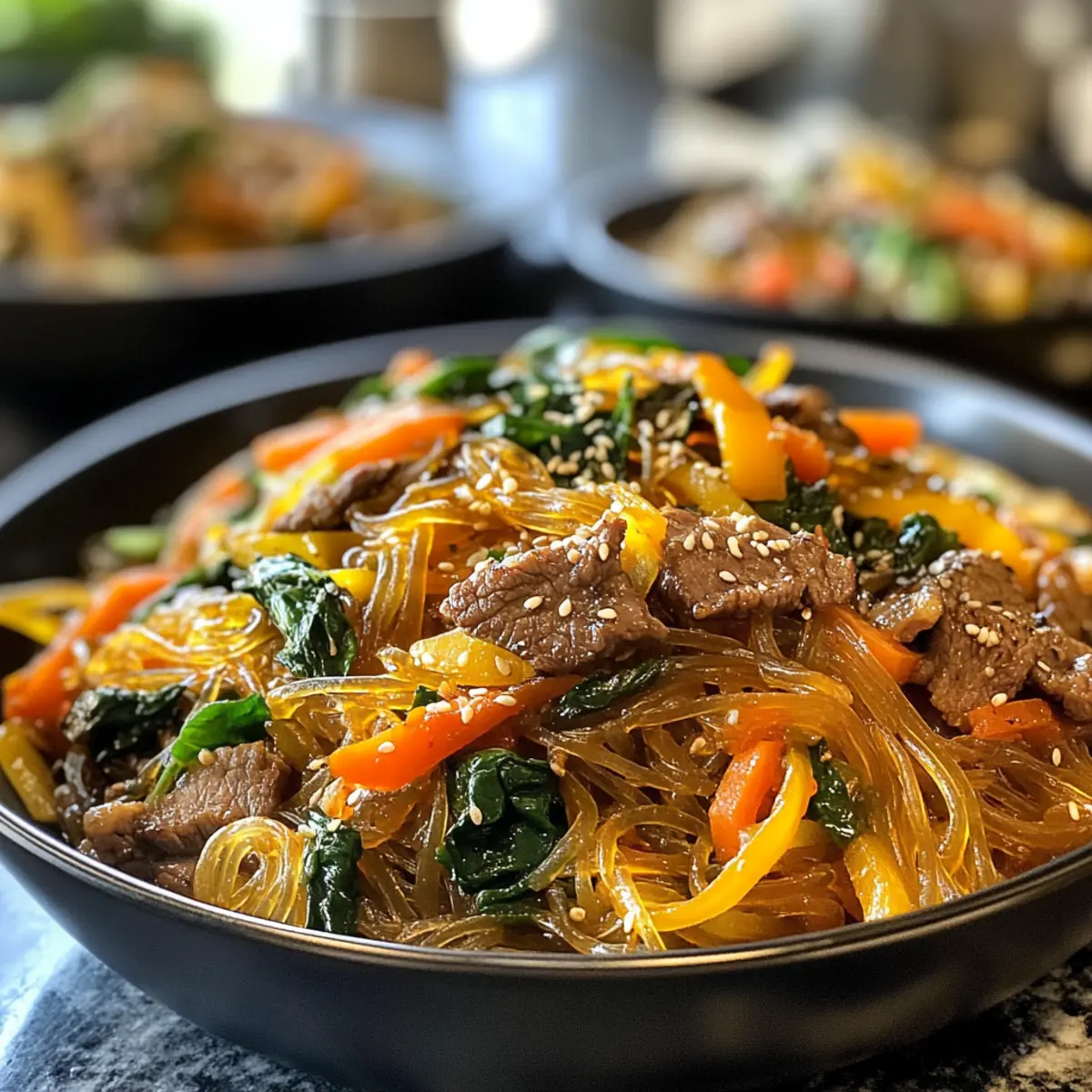
What to Serve with Japchae?
Imagine a cozy dinner gathering where vibrant flavors dance on your palate and laughter fills the air, making every bite even more satisfying.
-
Steamed Rice: A classic side that perfectly balances the savory flavors of Japchae, providing a hearty backdrop to the meal.
-
Kimchi: This spicy Korean staple adds a zesty kick, enhancing Japchae’s sweetness and introducing a delightful contrast of flavors.
-
Korean Fried Chicken: Crispy on the outside and juicy on the inside, the bold flavor of fried chicken pairs beautifully with the chewy noodles.
-
Fresh Salad with Sesame Dressing: Crisp greens and a nutty sesame dressing provide a refreshing contrast to the richness of the noodles.
-
Miso Soup: Light yet flavorful, this warm soup captures umami and is a cozy, comforting companion alongside your Japchae.
-
Korean Pickled Radish (Danmuji): These tangy, crunchy bites offer a palate-cleansing experience that complements the richness of the noodles.
-
Fruity Soju Cocktail: A refreshing drink option, like a fruity soju cocktail, adds fun and excitement, making your meal even more festive.
Adding these sides creates a vibrant and fulfilling table that showcases the best of Korean cuisine and elevates your Japchae experience!
Make Ahead Options
These Japchae noodles are perfect for meal prep enthusiasts! You can prepare the sweet potato glass noodles up to 24 hours in advance by soaking and draining them, then refrigerating them to maintain their texture. Vegetables can also be chopped and stored in an airtight container for up to 3 days. When you’re ready to serve, simply stir-fry the beef and vegetables together, add the prepped noodles, and season with soy sauce and sesame oil, cooking everything until heated through. This way, you’ll have a delicious, home-cooked meal ready with minimal effort, allowing you to enjoy that lovely, nostalgic flavor of Japchae on even the busiest of weeknights!
Expert Tips for Perfect Japchae
-
Noodle Soaking: Soak the sweet potato glass noodles until fully softened but not mushy; this ensures the right chewy texture in your Japchae.
-
Flavor Balance: Taste as you go! Adjust soy sauce and sesame oil according to your preference for a richer or lighter flavor.
-
Efficient Cooking: Work quickly while stir-frying to retain the vibrant colors and crunch of the vegetables, avoiding overcooking for that authentic Japchae experience.
-
Protein Flexibility: Don’t hesitate to substitute beef with tofu or chicken based on your dietary needs; each option brings a unique flair to the dish.
-
Meal Prep Essential: Cooked Japchae stores wonderfully in the fridge for up to 3 days—save leftovers for quick meals, as flavors deepen with time.
Japchae Variations & Substitutions
Feel free to get creative with your Japchae and personalize it to perfection!
- Dairy-Free: Use vegetable broth instead of beef for added depth—great for a lighter version!
- Gluten-Free: Swap soy sauce for tamari to maintain that rich flavor without gluten.
- Vegetarian: Replace beef with tofu or tempeh for the protein, bringing a whole new texture to your dish.
- Colorful Veggies: Incorporate seasonal veggies like zucchini or snap peas; they add freshness and vibrant color.
- Spicy Kick: Stir in some gochujang or red pepper flakes for an exciting heat that awakens the taste buds.
- Noodle Twist: Try different noodles like rice noodles or buckwheat for a unique twist on the classic texture.
- Nutty Flavor: Add a sprinkle of toasted sesame seeds before serving for an extra crunch and nutty aroma.
- Herb Infusion: Enhance aroma with fresh herbs like cilantro or basil—total showstoppers in flavor!
Curious about meals that pair perfectly with this delicious dish? Check out some ideas for serving with authentic Korean side dishes to elevate your dining experience!
How to Store and Freeze Japchae
Fridge: Store leftover Japchae in an airtight container for up to 3 days. Make sure it’s completely cooled before sealing to maintain freshness.
Freezer: Freeze Japchae in portions for up to 2 months. Use freezer-safe bags or containers, and remove as much air as possible to prevent freezer burn.
Reheating: When ready to eat, thaw overnight in the fridge. Reheat in a pan over medium heat, adding a splash of water or oil to regain moisture and warmth.
Meal Prep: Japchae still tastes delicious after a day in the fridge, making it a great option for meal prep or easy dinners throughout the week!
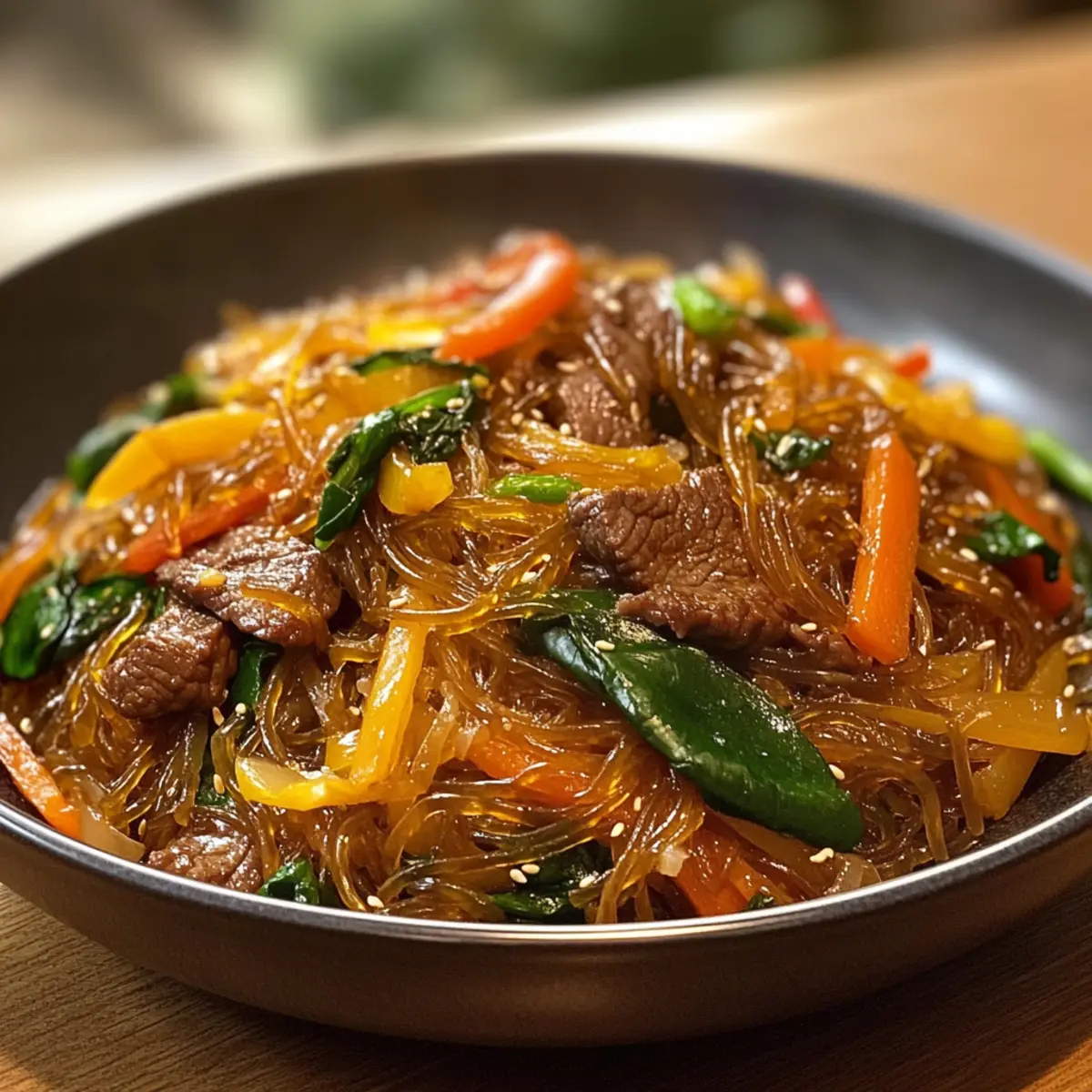
Japchae (Korean Stir-Fried Noodles) Recipe FAQs
What type of noodles should I use for Japchae?
Absolutely! Ideally, sweet potato glass noodles are essential for that signature chewy texture and subtly sweet flavor. While you can use other types of noodles in a pinch, like rice or egg noodles, they may not deliver the authentic experience of Japchae.
How should I store leftover Japchae?
Very! Leftover Japchae can be stored in an airtight container in the refrigerator for up to 3 days. Allow the dish to cool completely before sealing it to maintain freshness and optimize flavors. Reheat either in a skillet over medium heat or in the microwave with a splash of water to restore moisture.
Can I freeze Japchae?
Of course! To freeze, portion out your Japchae into freezer-safe bags or containers, making sure to remove as much air as possible to avoid freezer burn. It can be frozen for up to 2 months. When you’re ready to enjoy, thaw it overnight in the refrigerator and reheat on the stove for the best texture.
How do I customize the protein in Japchae?
The more the merrier! You can substitute the beef with chicken, shrimp, or tofu to suit your dietary preferences. For a vegetarian option, sauté the tofu until golden before adding it to the mix. Each protein variation provides a unique taste and texture, making it easy to customize for everyone’s liking.
Are there any allergy considerations for Japchae?
Absolutely! While many ingredients are natural and wholesome, always be mindful of specific allergies. Soy sauce contains wheat, so use a gluten-free version if necessary. Green onions can be omitted for those with allergies, and ensure your sesame oil is suitable for those with nut allergies.
What should I do if my noodles are overcooked?
Oh no! If you find your noodles are overcooked and mushy, you can try giving the dish a quick stir-fry in a hot pan with a little oil to regain some firmness. Alternatively, if they’re too soft, consider blending them into a broth-based soup to enjoy their flavor without the rubbery texture.
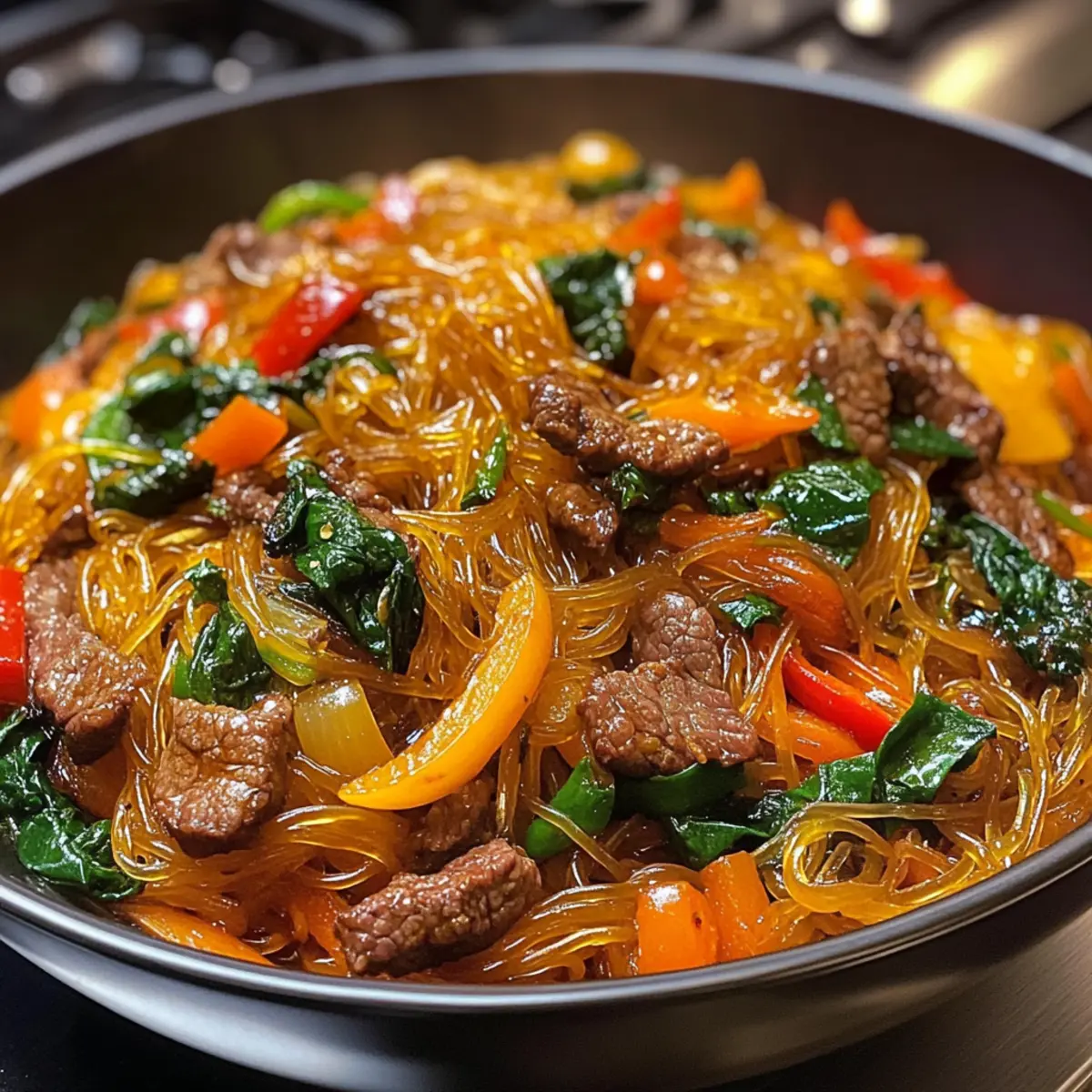
Savory Japchae: Delight in Chewy Sweet Potato Noodles
Ingredients
Equipment
Method
- Soak the sweet potato glass noodles in warm water for about 30 minutes until tender and pliable. Drain and set aside.
- Heat oil in a skillet and stir-fry the thinly sliced beef for about 3-4 minutes until browned and cooked through. Remove and set aside.
- In the same skillet, add oil if needed, and stir-fry the chopped vegetables for about 4-5 minutes until just tender.
- Return the cooked beef and vegetables to the skillet, then add the drained noodles.
- Pour soy sauce and sesame oil over the mixture, stir gently, and cook for an additional 5-7 minutes until heated through.
- Sprinkle with chopped green onions before serving and enjoy your Japchae hot as a main course or alongside rice.
Leave a Reply