
As I tore open a packet of instant noodles, I was transported back to the bustling street markets of Thailand, where the air was filled with the aroma of spices and sizzling goodness. Craving that authentic experience, I whipped up this Thai Coconut Curry Ramen—it’s my go-to quick weeknight meal that never disappoints. With a rich coconut broth and the vibrant kick of red curry paste, this recipe strikes the perfect balance between comfort and excitement. Ready in just 30 minutes, it’s perfect for those evenings when you want something satisfying without the fuss of complicated cooking. Plus, it’s easily adaptable: feel free to switch out the proteins or noodles to suit your taste. Are you ready to dive into a bowl of deliciousness? Let’s get cooking!
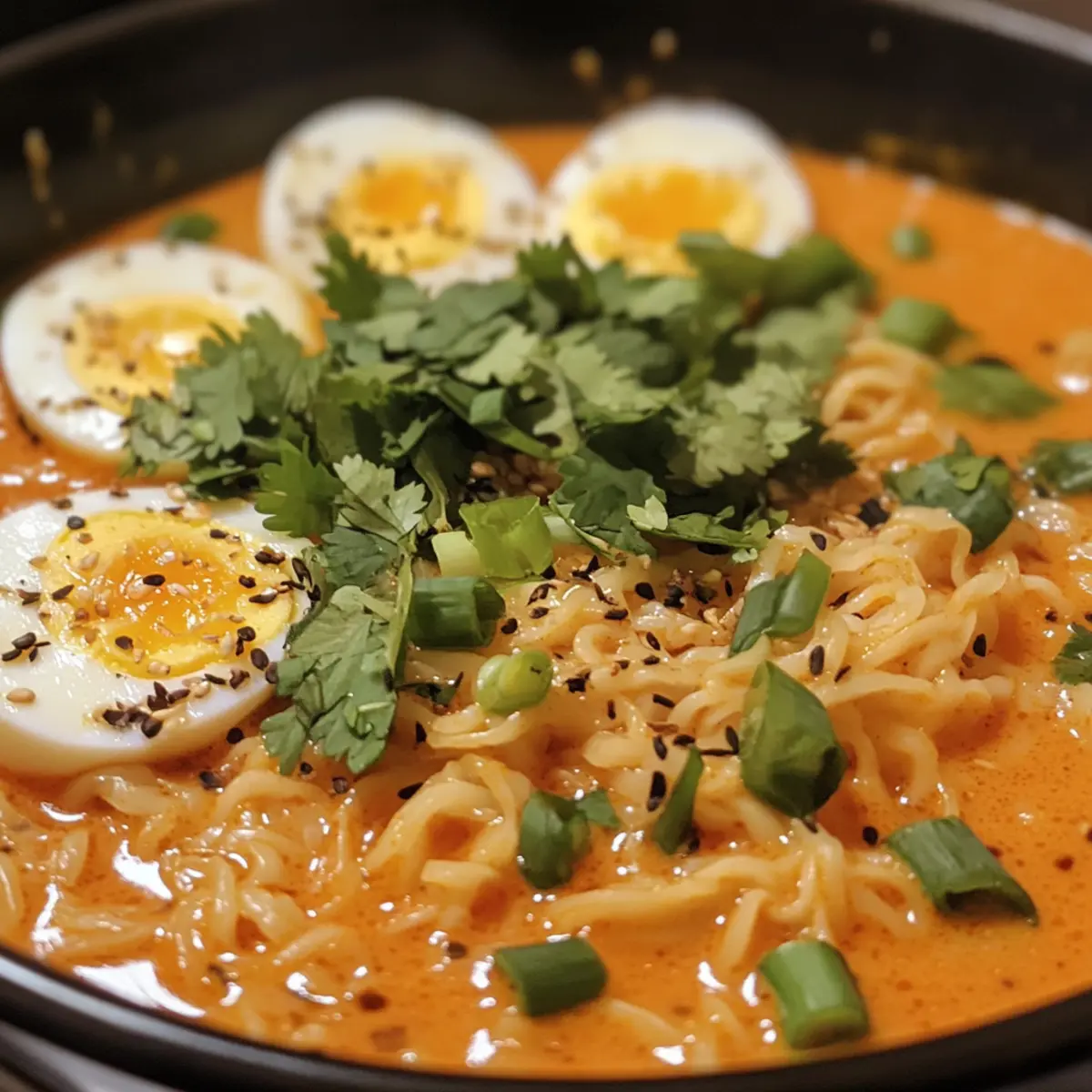
Why is Thai Coconut Curry Ramen a Must-try?
Quick to Prepare: In just 30 minutes, you can whip up this dish, making it a perfect option for busy weeknights.
Bursting with Flavor: The combination of creamy coconut milk and aromatic red curry paste creates a delightful taste experience that’s sure to please your palate.
Versatility at Its Best: Easily customize your meal by swapping proteins or noodle types—try adding tofu for a vegetarian twist or shrimp for extra flavor!
Crowd-Pleaser: This dish is not only delicious but also hearty enough to satisfy any hungry crowd. Pair it with some vegetable potstickers or spring rolls for the perfect spread!
Nostalgic Touch: Reminiscent of dining in vibrant Thai markets, this recipe brings authentic flavors right to your kitchen without the need to leave home. Dive into a bowl of comforting goodness tonight!
Thai Coconut Curry Ramen Ingredients
For the Broth
• Instant Ramen Noodles – Provides the base for the dish; discard flavor packets to avoid added sodium.
• Canola Oil – Used for sautéing shallots; any neutral oil can be substituted.
• Shallots – Adds sweetness and depth to the broth; yellow or white onions are good substitutes.
• Red Curry Paste – A key flavor component, offering heat and vibrant color; Mae Ploy is recommended for authenticity.
• Tomato Paste – Enhances the broth’s depth and adds slight sweetness; can be omitted if desired.
• Garlic – Provides aromatic flavor; fresh garlic is best for optimal taste.
• Ginger – Adds warmth and spice; freshly grated ginger is preferred over ground ginger.
• Coconut Milk – Creates a rich, creamy broth; full-fat yields the best texture.
• Chicken Stock – Forms the base of the broth; vegetable stock can be used for a vegetarian version.
• Toasted Sesame Oil – Adds a nutty flavor; normal sesame oil can be substituted but may lack depth.
For the Protein
• Ground Pork – Adds protein and texture; substitute with tofu, chicken, or shrimp for variation.
For Garnishing
• Fresno Chili – Provides heat and color; swap with any mild chili based on your spice preference.
• Fish Sauce – Enhances umami flavor; soy sauce can be a vegetarian substitute but flavors will differ.
• Kosher Salt and Freshly Ground Black Pepper – For seasoning to taste.
• Soft-Boiled Eggs – Enrich the dish with creamy yolks; hard-boiled eggs can be used instead.
• Fresh Cilantro Leaves – Adds freshness and brightness; can be omitted based on personal taste.
• Green Onions – Provides crunch and mild onion flavor; can be replaced with chives.
• Toasted Sesame Seeds – Garnish to add texture and flavor.
Discover the fantastic combination of these ingredients to create an unforgettable Thai Coconut Curry Ramen experience!
Step‑by‑Step Instructions for Thai Coconut Curry Ramen
Step 1: Cook the Noodles
In a large pot, bring water to a rolling boil over high heat. Add the instant ramen noodles and cook for 2-3 minutes until tender but firm. Drain and rinse the noodles under cold water to stop the cooking process, then set them aside. This step ensures the noodles will be perfectly al dente in your comforting Thai Coconut Curry Ramen.
Step 2: Sauté Shallots
In a spacious stockpot, heat 2 tablespoons of canola oil over medium heat. Once the oil is shimmering, add the sliced shallots and sauté for about 3 minutes until they become soft and translucent. Allow the shallots to release their sweet aroma, which will serve as the flavorful foundation for your rich broth.
Step 3: Combine Pastes
Stir in 3 tablespoons of red curry paste, 1 tablespoon of tomato paste, 3 minced garlic cloves, and 1 tablespoon of freshly grated ginger with the shallots. Cook this mixture for about 2 minutes, stirring frequently, until it’s fragrant and the oils begin to separate. This step infuses the broth with vibrant flavors essential to your Thai Coconut Curry Ramen.
Step 4: Add Liquids
Pour in one can (13.5 oz) of creamy coconut milk and 3 cups of chicken stock into the pot. Increase the heat to high, and bring the mixture to a gentle boil. Once boiling, reduce the heat to low and let it simmer for 8-10 minutes, allowing the flavors to meld beautifully and creating a velvety broth.
Step 5: Cook the Pork
In a separate skillet, heat 1 tablespoon of toasted sesame oil over medium-high heat. Add 6 ounces of ground pork along with one minced garlic clove and one chopped fresno chili, cooking for 3-5 minutes until the pork is browned and fully cooked. Stir in 1 tablespoon of fish sauce and season with kosher salt and freshly ground black pepper, creating a savory topping for your ramen.
Step 6: Serve
To serve, divide the cooked ramen noodles among bowls. Ladle the piping hot coconut broth over the noodles, then generously top with the cooked ground pork, halved soft-boiled eggs, fresh cilantro leaves, sliced green onions, and a sprinkle of toasted sesame seeds. Your homemade Thai Coconut Curry Ramen is now ready to be enjoyed!
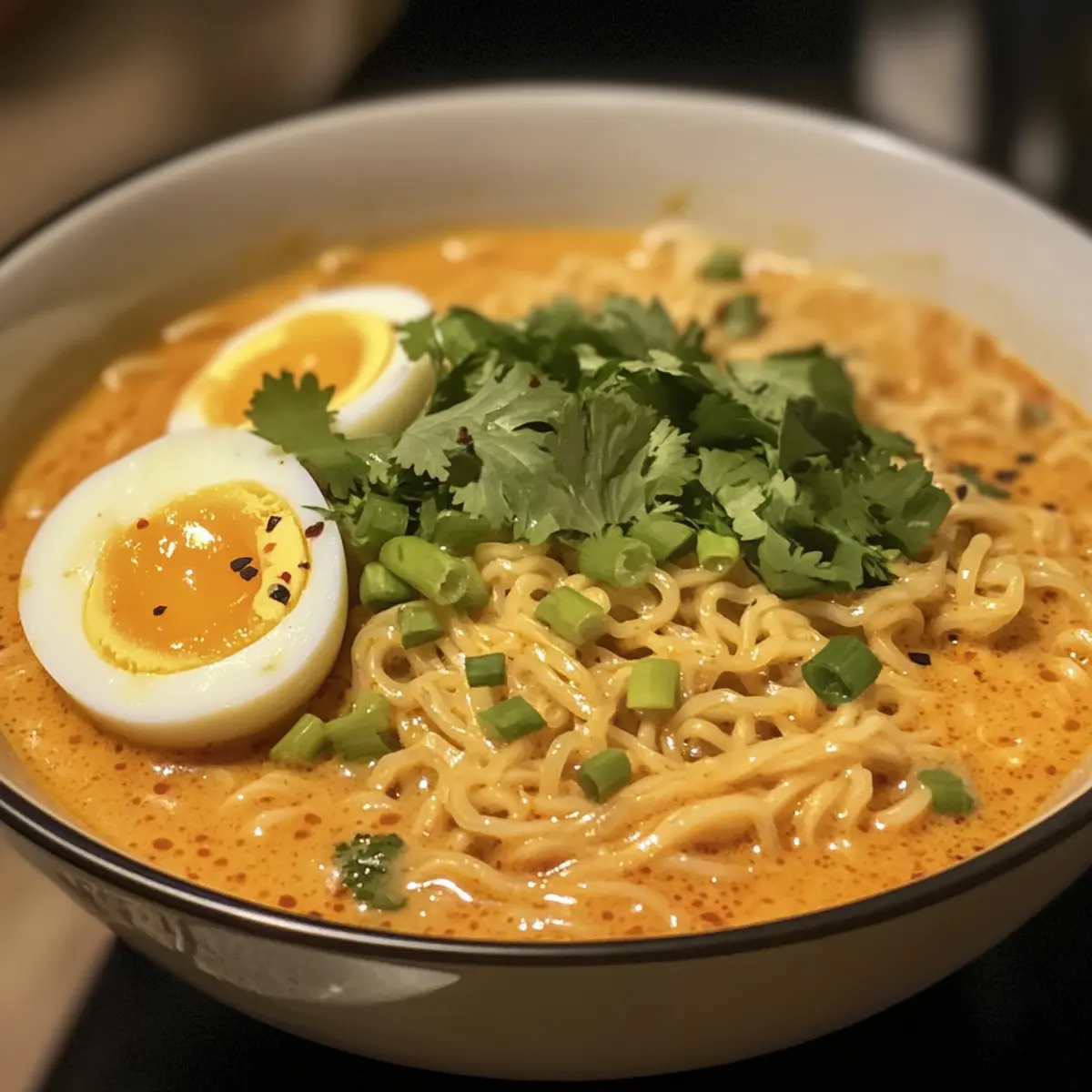
How to Store and Freeze Thai Coconut Curry Ramen
Fridge: Store any leftovers in an airtight container for up to 2 days. Ensure the noodles and broth are kept separate to maintain their textures.
Freezer: While not ideal for freezing, if you must, store the broth in an airtight container for up to 2 months. The coconut milk may separate upon thawing, which can affect texture.
Reheating: Gently reheat the broth on the stove over low heat and combine with freshly cooked ramen noodles for the best results. Avoid microwaving to maintain the integrity of the dish.
Noodle Storage: If preparing in advance, keep the cooked noodles separate from the broth. Add them just before serving for that authentic taste in your Thai Coconut Curry Ramen!
Thai Coconut Curry Ramen Variations
Feel free to take this recipe and make it your own; experimenting with flavors and textures can lead to delightful surprises!
-
Curry Paste Swap: Use green or yellow curry paste for distinct flavor profiles. Each variety offers unique spice levels and aroma.
-
Meat Alternatives: Replace ground pork with shredded chicken, shrimp, or spicy tofu for a vegetarian twist. These options create a lighter dish with new textures.
-
Veggie Boost: Add a medley of vegetables like spinach, bok choy, or bell peppers to enhance nutrition. They’ll add vibrant color and crunch to each bite!
-
Noodle Choices: Experiment with rice noodles or even zucchini noodles for a gluten-free version. This twist keeps the dish light while still delivering on taste.
-
Extra Creaminess: Stir in a dollop of peanut butter for a creamy, nutty flavor you won’t forget. It adds richness to the broth while elevating the dish further.
-
Kick Up the Heat: Toss in sliced jalapeños or a splash of sriracha for a fiery kick. Spice lovers will adore this simple way to enhance warmth!
-
Herb Variations: Swapping fresh cilantro with Thai basil can offer an exciting twist. Its unique fragrance and flavor profile will transport your tastebuds even further.
-
Savory Umami: Substituting fish sauce with soy sauce or tamari can delight vegetarians while still delivering a bright umami flavor.
For fans of more Thai-inspired dishes, check out my Crockpot Thai Coconut or Jamaican Curry Chicken recipes for more delicious meals that are just as easy to make!
Expert Tips for Thai Coconut Curry Ramen
-
Noodle Care: Rinse cooked noodles under cold water to stop the cooking process and prevent them from becoming mushy in your Thai Coconut Curry Ramen.
-
Flavor Balance: Always taste your broth before serving; adjust salt and fish sauce to ensure the umami level is perfect.
-
Use Fresh Ingredients: Fresh garlic and ginger amplify flavors, so avoid substitutes for the best results in this dish.
-
Customize Proteins: Switch ground pork for shrimp or tofu depending on dietary preferences or what’s available in your pantry.
-
Garnish Generously: Don’t skimp on cilantro and green onions; they add vibrant freshness and visual appeal to your bowl!
-
Storage Wisdom: If making ahead, store the broth and noodles separately to maintain optimal texture for later enjoyment.
Make Ahead Options
These Thai Coconut Curry Ramen are perfect for meal prep enthusiasts! You can prepare the broth and toppings up to 3 days in advance, storing them separately in airtight containers to maintain their delightful flavors. The broth can be refrigerated, and the ground pork topping can be stored to ensure it remains tender. For the noodles, cook them just before serving to prevent them from becoming mushy; rinse them under cold water and toss them lightly with a bit of oil to keep them from sticking together. When you’re ready to enjoy your meal, simply reheat the broth and toppings, then serve over the noodles for a quick, satisfying dinner that tastes just as delicious as when freshly made!
What to Serve with Thai Coconut Curry Ramen
Indulging in a bowl of fragrant Thai Coconut Curry Ramen is a delight, and complementing it with the right sides can elevate your meal to perfection.
-
Vegetable Spring Rolls: These crispy, light bites offer a refreshing crunch that pairs beautifully with the rich, creamy ramen.
-
Thai Chicken Thighs: Marinated in aromatic spices, these tender chicken thighs bring a savory depth that enhances the broth’s flavors.
-
Crispy Tofu Bites: Lightly fried tofu adds a satisfying texture and absorbs the flavorful broth, making it an excellent protein-rich option.
-
Miso Soup: The savory umami notes of miso soup complement the coconut broth, creating a harmonious balance of flavors.
-
Fresh Herbs Salad: A vibrant salad of herbs like mint, basil, and cilantro adds brightness and freshness, perfectly cutting through the richness of the ramen.
-
Jasmine Rice: Serve fluffy jasmine rice on the side to soak up that delicious broth, making every bite irresistibly tasty.
-
Chili Oil: Drizzling a bit of chili oil over your dish can bring an extra kick to your ramen, enhancing the overall experience.
-
Lychee Smoothie: To round off your meal, a chilled lychee smoothie provides a fruity sweetness, offering a delightful contrast to the spicy notes of the ramen.
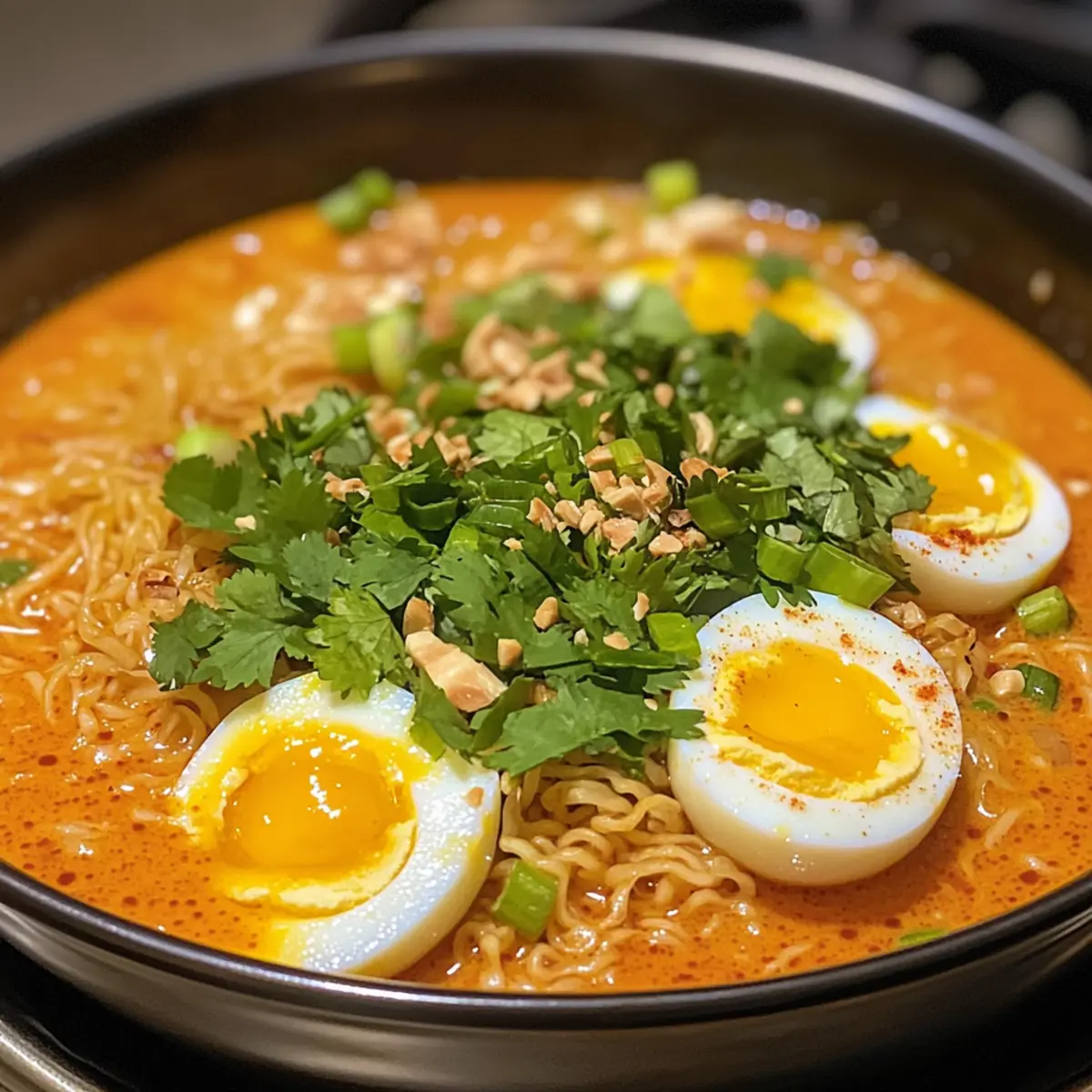
Thai Coconut Curry Ramen Recipe FAQs
How do I select ripe ingredients for this recipe?
Absolutely! For the freshest flavor, choose shallots that are firm and free of dark spots. Look for vibrant, unblemished ginger roots, and opt for bright, smooth red curry paste with a good aroma. If using fresh cilantro, ensure the leaves are bright green and not wilted.
What are the best storage methods for leftovers?
I recommend storing any leftovers in an airtight container in the fridge for up to 2 days. To preserve the noodle texture, keep the broth and noodles separate. Reheating is best achieved on the stovetop over low heat, allowing you to mix the noodles with freshly cooked broth just before serving.
Can I freeze Thai Coconut Curry Ramen?
While it’s not ideal, you can freeze the broth for up to 2 months in an airtight container. However, keep in mind that coconut milk might separate when thawed. To reheat, gently warm the broth on the stove until hot, then prepare fresh noodles to serve alongside.
What should I do if my broth is too salty?
Very! If you find your broth tastes too salty, you can balance it by adding more unsalted chicken stock or a splash of coconut milk to mellow the flavors. Another option is cooking a small amount of rice to add to the broth, helping to absorb some of the saltiness.
Are there any dietary considerations to keep in mind?
Absolutely! If you or someone you are serving has a shellfish allergy, you can easily switch out fish sauce for soy sauce for a vegetarian version. Also, this recipe can be made gluten-free by using gluten-free ramen noodles and checking the fish sauce for gluten-free certification. Always double-check ingredient labels to ensure they meet your dietary needs.
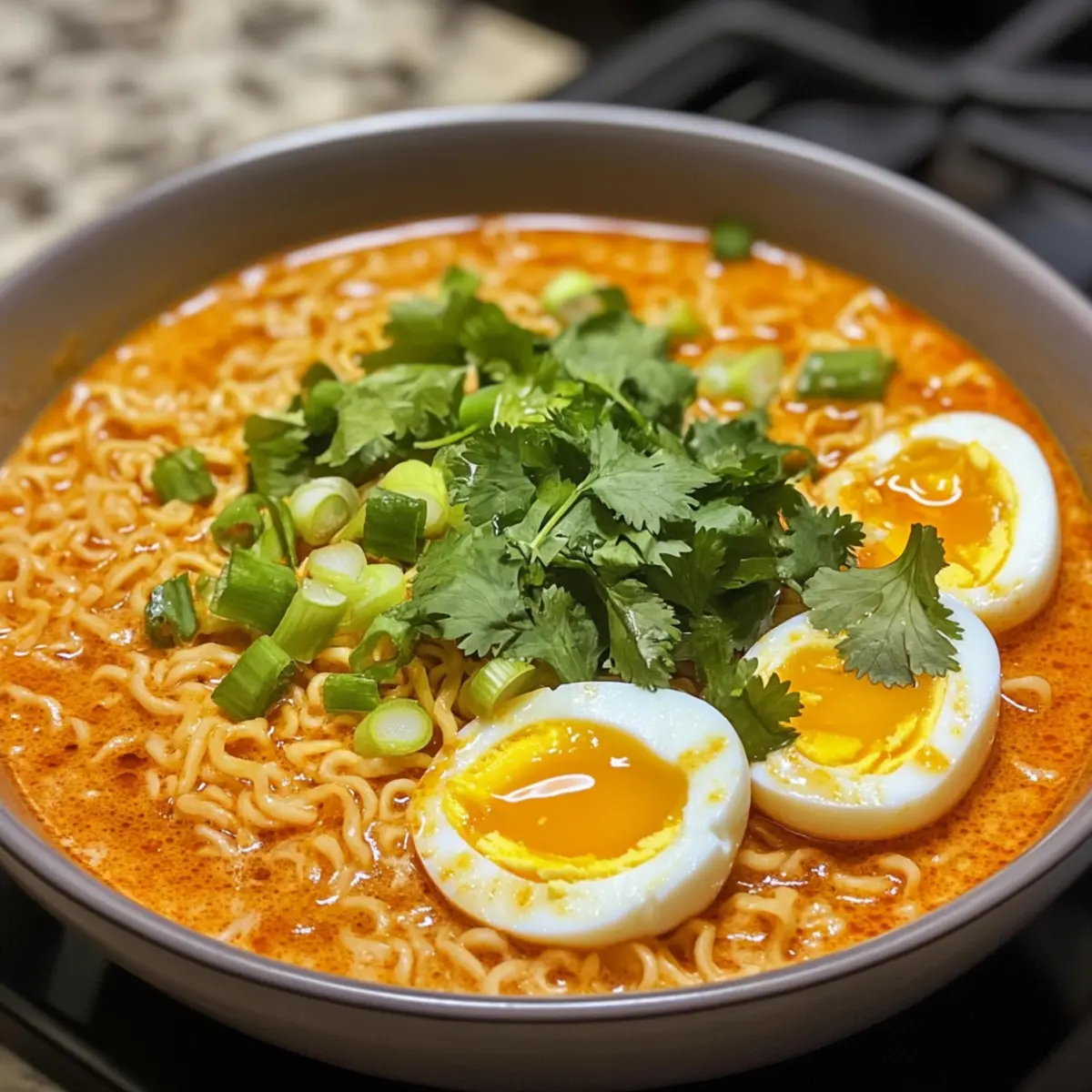
Irresistible Thai Coconut Curry Ramen in Just 30 Minutes
Ingredients
Equipment
Method
- In a large pot, bring water to a rolling boil over high heat. Add the instant ramen noodles and cook for 2-3 minutes until tender but firm. Drain and rinse under cold water and set aside.
- In a stockpot, heat 2 tablespoons of canola oil over medium heat. Sauté shallots for about 3 minutes until soft and translucent.
- Stir in 3 tablespoons of red curry paste, 1 tablespoon of tomato paste, 4 minced garlic cloves, and 1 tablespoon of grated ginger. Cook for 2 minutes until fragrant.
- Pour in 1 can of coconut milk and 3 cups of chicken stock. Bring to a gentle boil, then reduce to low and simmer for 8-10 minutes.
- In a separate skillet, heat 1 tablespoon of toasted sesame oil. Add 6 ounces of ground pork, 1 minced garlic clove, and 1 chopped fresno chili, cooking for 3-5 minutes until browned. Stir in 1 tablespoon of fish sauce and season to taste.
- Divide the cooked ramen noodles among bowls, ladle the coconut broth over, and top with cooked ground pork, soft-boiled eggs, cilantro, green onions, and sesame seeds.
Leave a Reply