
As I watched the steam rise from my bowl of Tonkotsu Ramen Soup, the comforting aroma enveloped me like a warm hug. This isn’t just any bowl of noodles; it’s a culinary journey to Fukuoka, where creamy broth and tender chashu pork reign supreme. With its umami-rich flavor packed into every spoonful and the drizzle of aromatic black garlic oil, this homemade ramen feels like an indulgence you’d expect at a fancy restaurant. Best of all, while it may sound intricate, I’ll show you how to master it in your home kitchen, making it perfect for impressing guests or simply savoring a cozy night in. Ready to elevate your comfort food game?
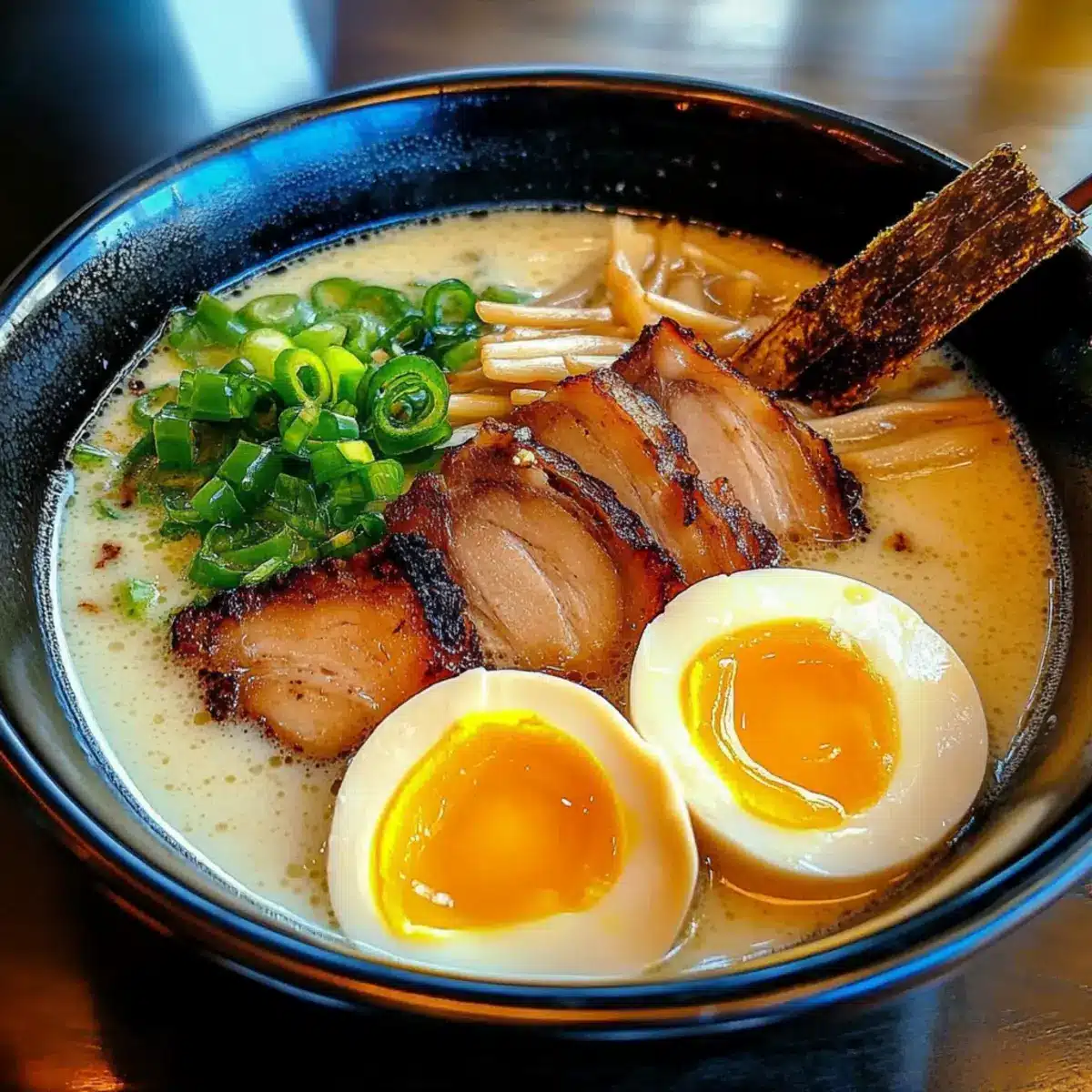
Why is Tonkotsu Ramen a Must-Try?
Unmatched Flavor: The depth of umami in this Tonkotsu Ramen is unparalleled, thanks to the slow-cooked pork broth that simmers for hours.
Ultimate Comfort Food: Imagine diving into a bowl of creamy broth filled with tender chashu pork, al dente noodles, and a hint of black garlic oil—pure bliss!
Easy Customization: Feel free to mix things up! Add your favorite toppings like spicy kimchi or sautéed mushrooms, making each bowl uniquely yours.
Perfect for Special Occasions: While it’s perfect for weeknights, this recipe is impressive enough to serve at dinner parties, tantalizing your guests with restaurant-quality flavors right at home.
If you’re also a fan of hearty soups, be sure to check out my recipes for Crock Pot Soup and Reuben Soup Hearty for more comforting options!
Tonkotsu Ramen Soup Ingredients
For the Broth
- Pork Bones – Foundation for the broth; neck bones or femur bones can also be used as substitutes.
- Pork Trotters – Adds collagen for a creamy texture; omit for a leaner broth but note that texture will be affected.
- Onion – Enhances broth flavor with sweetness; prepare by halving.
- Garlic – Provides aromatic depth; prepare by halving crosswise.
- Ginger – Contributes warmth and spice; slice into about 3 inches for infusion.
- Leeks – Adds subtle sweetness; use only the white part, cleaned and chopped.
- Water – Main liquid for simmering broth; replenish as it reduces.
- Kombu (optional) – For extra umami; add during the last hour of simmering.
For Chashu Pork
- Pork Belly – Main protein, sweet and tender; can use skin-on or skinless, rolled and tied.
- Soy Sauce – Provides savory flavor; essential for the braising liquid.
- Mirin – Adds sweetness and depth; a type of rice wine.
- Sake – Enhances flavor profile; can substitute with dry sherry if necessary.
- Water – Balances braising liquid; use 1/2 cup.
- Sugar – For caramelization; use 1/2 cup for this purpose.
- Garlic (crushed) – Adds flavor to the pork; helps caramelize during braising.
- Ginger (sliced) – Enhances depth of the chashu; sliced for infusion.
- Scallions – Adds freshness to the braising liquid; chop for easy distribution.
For Black Garlic Oil
- Neutral Oil – Base for the oil; canola or vegetable oil works best.
- Black Garlic – Provides a unique smoky flavor; if unavailable, roasted garlic can be a substitute.
- Raw Garlic – Adds raw aromatic contrast; prepare by mincing.
- Sesame Oil – For additional flavor depth; use a small amount for best results.
- Soy Sauce – Enhances flavor and depth; a dash goes a long way!
For Serving
- Ramen Noodles (fresh or dried) – Main carbohydrate; fresh is preferred but dried can be used.
- Soft-Boiled Eggs – Adds creaminess; prepare ajitsuke tamago style (marinated in sauce).
- Thinly Sliced Scallions – Fresh garnish for serving; sprinkle on top for color.
- Bamboo Shoots (Menma) – Adds texture and traditional flavor; use canned or fresh.
- Nori Sheets – Provides umami and texture; cut into strips for easy handling.
- Corn Kernels (optional) – For a touch of sweetness and color; fresh or canned will do.
- Toasted Sesame Seeds – For garnish; to sprinkle on top for that perfect finish.
Indulge yourself with this delicious Tonkotsu Ramen Soup recipe and bring a taste of Japan into your kitchen!
Step‑by‑Step Instructions for Tonkotsu Ramen Soup
Step 1: Prepare the Broth
Start by blanching the pork bones and trotters in a large stockpot filled with boiling water for 10 minutes to remove impurities. After draining, rinse the bones under cold water. Return the cleaned bones to the pot, cover with fresh water, and add halved onion, garlic, ginger slices, and chopped leeks. Allow the broth to simmer uncovered for 6-8 hours, skimming off any foam that rises to the surface, and replenish water as needed to keep the ingredients submerged.
Step 2: Make Chashu Pork
While the broth simmers, prepare the chashu pork. Roll the pork belly into a log and secure it tightly with kitchen twine. In a Dutch oven, combine soy sauce, mirin, sake, sugar, water, crushed garlic, sliced ginger, and chopped scallions. Add the pork belly to the pot, bring it to a gentle simmer, and cover. Cook on low heat for 2-3 hours, turning the pork occasionally for even flavor distribution, until it’s tender and infused with the savory braising liquid.
Step 3: Prepare Black Garlic Oil
For the black garlic oil, heat a small saucepan over low heat and pour in neutral oil. Add black garlic and minced raw garlic into the pan, cooking gently for 10-15 minutes, being careful not to burn them. Once fragrant, remove from heat and allow to cool slightly before blending the oil and garlic into a smooth consistency. Stir in a touch of sesame oil and soy sauce, creating a rich, smoky oil that will finish the Tonkotsu Ramen Soup beautifully.
Step 4: Soft-Boil Eggs
While the broth is still simmering, prepare your soft-boiled eggs. Bring a pot of water to a boil and gently lower in the eggs, cooking them for exactly 6.5 minutes. After cooking, transfer the eggs to an ice bath to halt the cooking process. Once cool, peel the shells off and marinate them in a bit of the chashu braising liquid for added flavor, allowing them to soak while you finish the soup.
Step 5: Cook Noodles
With the chashu and broth ready, it’s time to cook your ramen noodles. Bring a pot of water to a rolling boil and add the noodles, cooking according to the package instructions until al dente. This typically takes about 3-5 minutes. Once cooked, drain the noodles and rinse them briefly under cold water to stop the cooking process, then set them aside while you prepare to assemble the bowls.
Step 6: Assemble Your Bowl
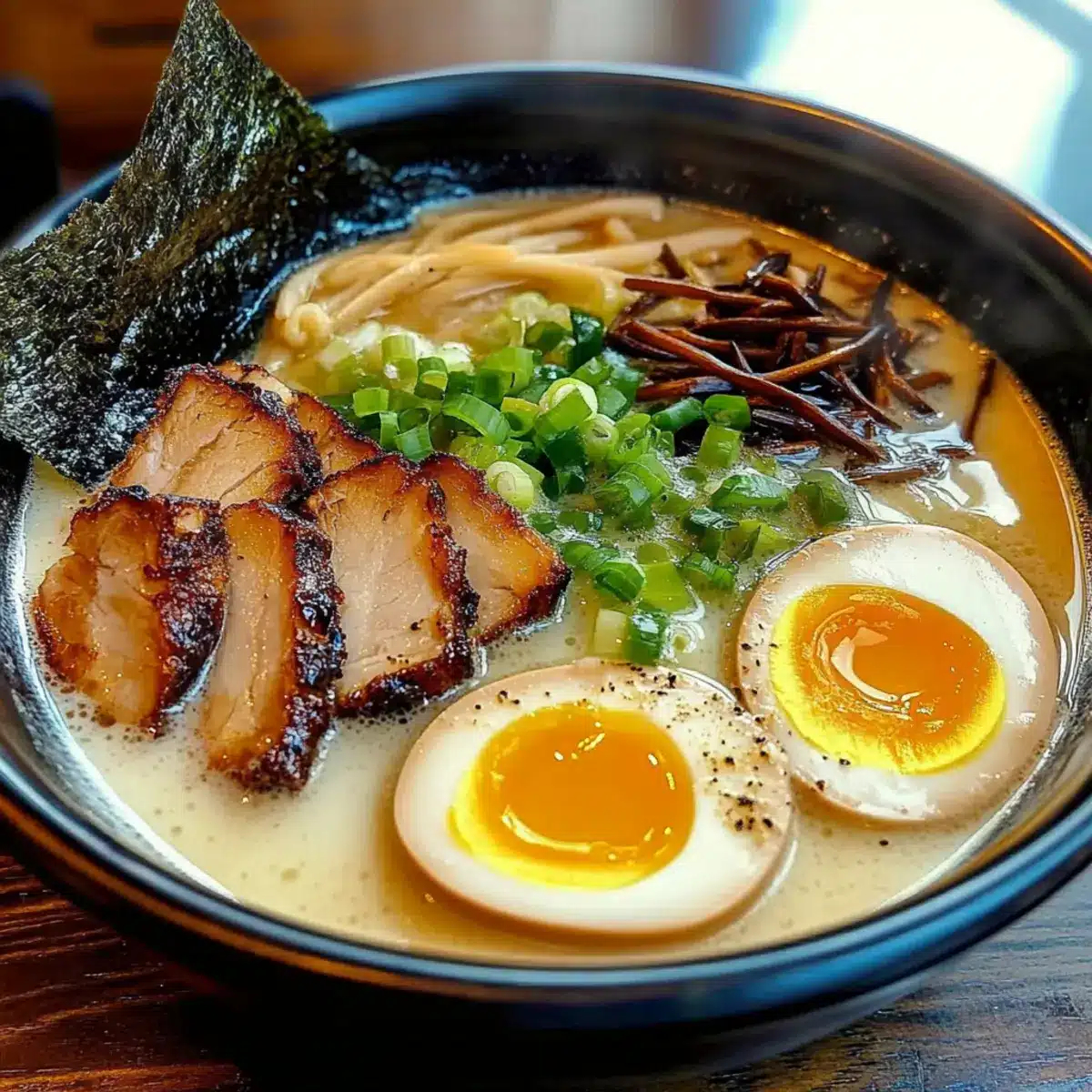
To create your delightfully indulgent Tonkotsu Ramen Soup, ladle the rich, hot broth into large bowls. Add a serving of cooked ramen noodles into each bowl, followed by generous slices of tender chashu pork, a halved soft-boiled egg, and garnishes like thinly sliced scallions, bamboo shoots, and corn. Finish with strips of nori, a drizzle of black garlic oil, and a sprinkle of toasted sesame seeds for that extra touch of umami before serving hot.
Tonkotsu Ramen Soup Variations & Substitutions
Feel free to customize this Tonkotsu Ramen Soup with exciting twists and alternatives that suit your taste buds!
- Chicken Option: Replace pork belly with chicken thighs for a lighter chashu. They’ll still be juicy and flavorful.
- Vegetarian Delight: Use a mixture of mushrooms and vegetable broth in place of pork for a plant-based bowls that maintains the umami goodness.
- Spicy Kick: Add chili oil or sliced peppers to the broth for a spicy kick that elevates the dish’s bold flavors.
- Noodle Swap: Try using udon or rice noodles instead of traditional ramen. They offer a different chewiness that can be surprisingly delightful!
- Umami Boost: Add a sprinkle of miso paste to the broth for an extra layer of savory flavor. It’s an umami superstar that melds beautifully with the existing ingredients.
- Creamy Texture: Blend in a bit of tahini or creamy cashew butter to the broth as it simmers. This will enrich the texture and add a nutty flavor that pairs beautifully with the other elements.
- Bok Choy Addition: Toss in some chopped bok choy or spinach as the broth is simmering. They make for a nutritious addition that brightens the dish.
- Ramen Toppings: Expand your topping options! Try adding crispy tofu, spicy kimchi, or pickled vegetables for a tangy crunch that will make each bite more exciting.
If you’re in the mood for another homey soup, you might also enjoy my Crockpot Thai Soup or warm up with a bowl of Dumpling Ramen Bowl. There’s always a cozy meal waiting for you!
Expert Tips for Tonkotsu Ramen Soup
-
Quality Ingredients: Use the best pork bones and chashu pork you can find. Fresh, high-quality ingredients will elevate your Tonkotsu Ramen Soup significantly.
-
Skim Regularly: Skimming the broth while it simmers is essential. This removes impurities and ensures a creamy, clear broth without unwanted grit.
-
Don’t Rush the Broth: The secret is in the simmer. Allow the broth to cook for the full 6-8 hours to develop an intense, rich flavor that defines tonkotsu ramen.
-
Perfectly Soft-Boil Eggs: Timing is key! Cook your eggs for exactly 6.5 minutes for a creamy yolk. Marinating them afterward will deepen their flavor and give them a beautiful color.
-
Taste as You Go: Always taste your broth before serving. Adjust flavors with additional soy sauce or salt if needed, and remember that each batch can vary in richness.
What to Serve with Tonkotsu Ramen Soup?
Pair your delicious soup with thoughtfully selected sides to elevate the entire dining experience.
-
Crispy Gyoza: These delightful dumplings offer a crispy exterior filled with savory meat and crisp vegetables, perfectly balancing the rich soup.
-
Seasoned Seaweed Salad: The refreshing crunch and umami flavor of the seaweed salad add a light contrast to the creamy broth, enhancing the overall meal.
-
Spicy Edamame: Tossed in sea salt and a touch of chili, spicy edamame brings a pop of flavor that pairs surprisingly well with the richness of tonkotsu.
-
Japanese Pickles (Tsukemono): These tangy pickles provide a refreshing acidity that cuts through the creamy broth, making each bite even more satisfying.
-
Chilled Soba Noodles: Lightly dressed with sesame sauce, these noodles can be a delightful side dish, complementing the hearty ramen while adding a different texture.
-
Craft Beer or Sake: Enjoy a light Japanese lager or a flavorful sake that balances the umami while enhancing the meal’s overall authenticity and experience.
-
Mochi Ice Cream: For dessert, the chewy texture and sweet flavor of mochi ice cream rounds out the meal beautifully, leaving you with a memorable finish.
Make Ahead Options
These Tonkotsu Ramen Soup preparations are an excellent choice for busy schedules! You can prepare the broth and chashu pork up to 3 days in advance and refrigerate them separately to maintain their rich flavors. For the broth, allow it to cool completely before transferring it to an airtight container. The chashu can also be sliced and stored, ensuring the pork remains tender. The black garlic oil can be made up to 1 week ahead and stored in a sealed jar. When you’re ready to serve, simply reheat the broth and noodles while plating with freshly sliced toppings for a quick, delicious meal that feels gourmet!
How to Store and Freeze Tonkotsu Ramen Soup
Fridge: Store leftover broth, noodles, and toppings in separate airtight containers in the refrigerator for up to 4 days to maintain freshness.
Freezer: The broth can be frozen for up to 2 months. Allow it to cool completely before pouring it into freezer-safe containers, leaving some space for expansion.
Reheating: Thaw frozen broth overnight in the refrigerator, then reheat gently on the stovetop. Cook noodles fresh for the best texture when serving your delicious Tonkotsu Ramen Soup.
Noodles: It’s best to store noodles separately as they can become soggy. If cooking extra noodles, keep them in a sealed container with a small amount of oil to prevent sticking.
Tonkotsu Ramen Soup Recipe FAQs
How do I choose the right pork bones for the broth?
Absolutely! Select bones that include a mix of marrow bones and collagen-rich options like trotters; this combination creates a creamy broth. Look for bones with a good amount of meat on them, and avoid any with dark spots or dried-out surfaces, indicating age or poor quality.
How should I store leftover Tonkotsu Ramen Soup?
For the best taste, store the broth, noodles, and toppings separately in airtight containers in the refrigerator for up to 4 days. This keeps the noodles from becoming soggy and retains the broth’s richness.
Can I freeze Tonkotsu Ramen Soup?
Yes, you can freeze the broth for up to 2 months. Just let it cool completely before pouring it into freezer-safe containers. Be sure to leave some space at the top of the container since liquids expand when frozen. When you’re ready to enjoy it, thaw overnight in the fridge and reheat gently on the stove.
What should I do if my broth doesn’t turn out creamy?
Very! If your broth lacks creaminess, it could be due to not using enough collagen-rich bones or not simmering long enough. To thicken it, you can simmer it uncovered for an additional hour or add a bit of gelatin to improve texture.
Are there any allergy considerations for Tonkotsu Ramen?
Certainly! This recipe contains soy sauce and other common allergens like sesame oil. If you have soy allergies, look for gluten-free soy sauce or use coconut aminos as a substitute. For other dietary restrictions, feel free to swap out ingredients accordingly, ensuring everyone can delight in this delicious comfort food.
How can I enhance the umami flavor in my Tonkotsu Ramen?
For an umami boost, try adding a piece of kombu (dried kelp) during the last hour of simmering the broth, as it infuses a wonderful depth. Additionally, finishing your ramen with a drizzle of black garlic oil elevates the overall flavor, giving you that rich taste like you’d find in a cozy ramen shop.
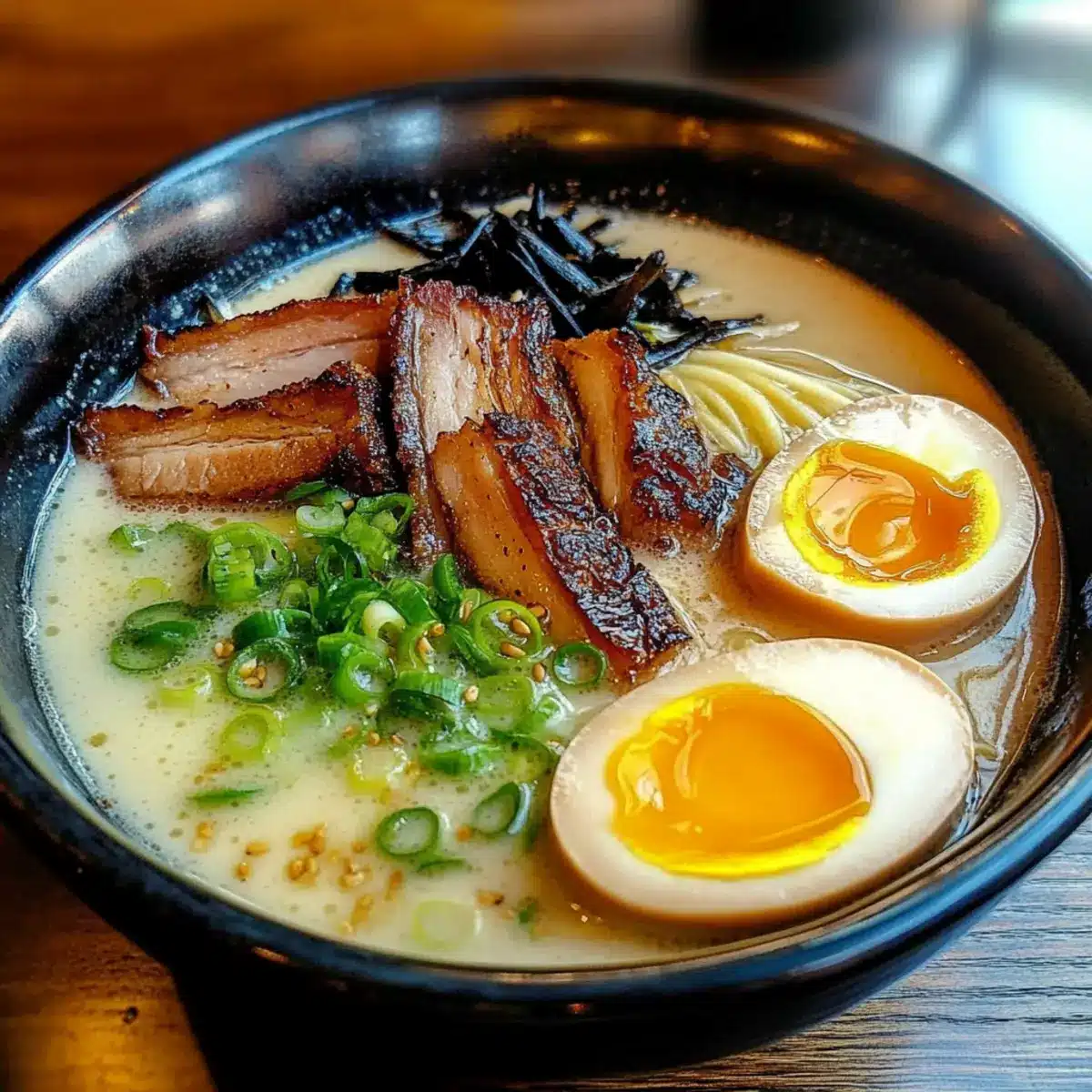
Joyful Tonkotsu Ramen Soup: Your Homemade Comfort Bowl
Ingredients
Equipment
Method
- Blanch the pork bones and trotters in boiling water for 10 minutes. Rinse and return to pot with fresh water, onion, garlic, ginger, and leeks. Simmer uncovered for 6-8 hours.
- Roll the pork belly and secure with twine. Combine soy sauce, mirin, sake, sugar, water, garlic, ginger, and scallions in a Dutch oven. Add pork belly, bring to a simmer, cover, and cook on low for 2-3 hours.
- Heat neutral oil in a small saucepan. Add black garlic and minced raw garlic. Cook gently for 10-15 minutes, then blend with sesame oil and soy sauce.
- Boil water, gently lower in eggs, and cook for 6.5 minutes. Transfer to ice bath, then peel and marinate in chashu liquid.
- Bring water to a boil and cook ramen noodles according to package instructions, about 3-5 minutes. Drain and rinse under cold water.
- Ladle broth into bowls, add noodles, chashu pork, halved soft-boiled egg, garnishes, nori, black garlic oil, and sesame seeds before serving hot.
Leave a Reply